Category: Uncategorized

  • PART 1: The Birthday Party That Ended In Flames

    PART 1: The Birthday Party That Ended In Flames

    My daughter-in-law deliberately smashed my sixty-fifth birthday cake in front of thirty guests, but she stopped smiling when I threw her $2,500 Louis Vuitton handbag into a burning fire pit.

    The cake hit the concrete with a sickening crash, scattering strawberries and white buttercream across the patio my late husband had built with his own hands.

    Two golden candles forming the number sixty-five rolled beneath the table, their broken pieces disappearing into the frosting as everyone stopped singing.

    I stood completely still, watching the beautiful cake Brenda had spent four hours baking become a ruined mess at my feet.

    Then my daughter-in-law, Sabrina Vance, slowly adjusted her expensive sunglasses and smiled directly into my face.

    “Cheap bakery cake again, Elena?”

    Her voice carried across the backyard with enough contempt to silence even the children sitting near the swimming pool.

    “Honestly, how embarrassing.”

    She tilted her head, inspected her perfectly manicured nails, and delivered one final word with a smirk I knew far too well.

    “Oops.”

    My son, Garrick, stood beside the barbecue grill holding a pair of metal tongs, his expression caught between shock and familiar reluctance.

    My younger sister, Clara, had stopped clapping, while Brenda pressed both hands over her mouth and stared at the cake she had lovingly prepared.

    Every person in that backyard had witnessed Sabrina deliberately extend her elbow and shove the cake from the table.

    There had been plenty of room behind my chair, but she had squeezed past me anyway, pretending that her clumsy movement was unavoidable.

    I knew what an accident looked like, and I knew what Sabrina looked like when she enjoyed hurting someone.

    My name is Elena Vance, and I had spent sixty-five years learning the difference between a careless mistake and calculated cruelty.

    I was a widow living in Austin, Texas, inside the home my husband, Julian, and I had purchased after decades of careful saving.

    Julian had died the previous year, leaving behind memories in every room and a silence that sometimes made our familiar house feel unbearably large.

    When Garrick and Sabrina asked to move in temporarily while saving for a downtown condominium, I welcomed them without hesitation.

    I believed sharing our home would soften my grief and allow me to feel close to my only son during the hardest year of my life.

    Instead, Sabrina treated my generosity like an invitation to take ownership of everything Julian and I had built.

    She replaced the curtains I had sewn myself, discarded my favorite ceramic mugs, and moved Julian’s photographs into a hallway nobody used.

    She covered my kitchen counters with expensive cosmetics, vitamins, shopping deliveries, and elaborate appliances she rarely bothered to clean.

    I paid the electricity, water, property taxes, groceries, and insurance while Garrick assured me their financial situation would improve once they purchased their condominium.

    I even filled his car with gasoline because he complained about how expensive his daily commute had become.

    In return, Sabrina criticized my cooking, mocked my clothes, and complained that my house looked like a museum for elderly people.

    Whenever I protested, Garrick asked me to be patient because Sabrina was supposedly adjusting to the stress of living with family.

    I swallowed my anger because losing Julian had taught me how frightening an empty house could become.

    For my birthday, I wanted one peaceful afternoon surrounded by people who remembered me as something more than an inconvenient old woman.

    Clara brought homemade salad, Brenda prepared my favorite vanilla strawberry cake, and several neighbors arrived carrying flowers from their gardens.

    For a few wonderful hours, laughter returned to the backyard where Julian had once hosted summer barbecues.

    Then Sabrina arrived wearing a fitted designer dress, oversized sunglasses, and a brand-new Louis Vuitton handbag dangling from her wrist.

    She placed the handbag on a patio chair where everyone could see it and announced its price before anyone asked.

    “Nearly twenty-five hundred dollars,” she declared, running her fingers across the leather as though presenting a museum exhibit.

    “Some people actually know how to appreciate luxury.”

    I smiled politely because I had promised myself not to let her bitterness spoil another important occasion.

    Twenty minutes later, Brenda carried out the birthday cake, and everyone gathered around the patio table to sing.

    I closed my eyes briefly, imagining Julian standing behind me with his warm hands resting on my shoulders.

    Then Sabrina stepped forward, deliberately swung her elbow, and sent the cake crashing onto the concrete.

    Watching her smirk, I suddenly remembered every insult, every discarded photograph, and every evening I had cried alone in my bedroom.

    Something inside me became strangely quiet, as though the part of my heart that had spent months begging for respect had finally exhausted itself.

    Without raising my voice, I walked toward the chair holding Sabrina’s precious handbag and lifted it by its expensive leather handles.

    She watched me with a puzzled smile, apparently expecting another harmless gesture from the woman she believed would never defend herself.

    I crossed the patio toward the brick fire pit, where the charcoal from Garrick’s barbecue still glowed beneath a thin layer of ash.

    Then I dropped the handbag directly onto the burning coals and watched smoke begin curling from its leather surface.

    Sabrina’s scream shattered the stunned silence, sending several guests stumbling backward as she rushed toward the fire pit.

    “My bag!”

    Garrick grabbed a metal tool and dragged the smoking purse away from the hottest coals, but the leather was already scorched and badly damaged.

    Sabrina turned toward me with tears of fury streaming down her cheeks and demanded that my son do something about his insane mother.

    Garrick marched across the patio, his face red with anger, and demanded whether I understood how much her handbag had cost.

    I looked at the ruined cake beside my shoes, then lifted my eyes toward the son who had watched his wife humiliate me.

    “Oops.”

    Nobody laughed, although Clara stepped beside me and quietly told Garrick that Sabrina had deliberately destroyed my birthday cake.

    Sabrina screamed that she would make me repay every dollar, threatening to call the police if necessary.

    I understood that destroying her property had been wrong, but I refused to apologize for finally standing up to her cruelty.

    The party ended beneath a cloud of embarrassment, with Brenda helping Clara clean the patio while my guests quietly said goodbye.

    That night, I lay awake listening to Garrick and Sabrina arguing upstairs, wondering how a day meant to celebrate my life had become another battle.

    The following morning, I entered the kitchen before sunrise and opened my online banking account while the house remained silent.

    My checking balance was thousands of dollars lower than it should have been, even after accounting for household expenses and recent bills.

    I refreshed the screen twice, convinced the bank had made some mistake that would correct itself.

    Then I opened my transaction history and found a series of electronic transfers stretching back several months.

    Each transfer had been sent to the same recipient, sometimes twice within a single week, and the accumulated amount made my hands tremble.

    I selected the most recent transaction and stared at the recipient’s name until the letters became painfully clear.

    SABRINA VANCE.

    The payment had been made that very morning, while my daughter-in-law was still sleeping upstairs.

    And the amount was exactly $2,500.

    For several seconds, I couldn’t breathe.

    I checked the date, the account number, and the transaction details, hoping I had misunderstood what I was seeing.

    Then I noticed a small detail that made my stomach turn.

    The transfer hadn’t been made through my usual banking app.

    It had been authorized using the account access I had once given Garrick to help him pay household bills.

    I printed every transaction and laid the pages across the kitchen table, my hands trembling as the total slowly revealed itself.

    In six months, $38,750 had disappeared from my savings.

    I heard footsteps on the stairs.

    Sabrina entered the kitchen wearing a silk robe, glanced at the papers, and stopped dead in her tracks.

    For the first time since she had moved into my home, she looked genuinely afraid.

    “What’s all this?” she asked, forcing a laugh.

    I slid the bank statement toward her.

    “Perhaps you can explain why you’ve been sending yourself my money.”

    Her face drained of color.

    Before she could answer, Garrick appeared in the doorway, still wearing yesterday’s clothes.

    He looked at the statements, then at his wife.

    And in that moment, I realized something even worse than the money had been stolen.

    My son already knew.

    “Mom, please,” he whispered. “Let us explain.”

    Sabrina immediately grabbed his arm, but I raised my hand.

    “No. Yesterday, you watched your wife destroy my birthday cake. Today, I discovered that someone has been destroying my life behind my back. This time, I’m listening to the truth.”

    Garrick lowered his head.

    Then he confessed that Sabrina had convinced him to transfer the money, claiming they needed it for their condominium deposit.

    But the condominium didn’t exist.

    The money had paid for designer clothes, luxury vacations, expensive dinners, and the lifestyle Sabrina insisted she deserved.

    I looked at my son, the little boy whose scraped knees I had kissed and whose college education I had sacrificed so much to afford.

    “How could you do this to me?”

    He began to cry.

    Sabrina, however, showed no remorse.

    “You have plenty of money, Elena! You’re sixty-five. What are you even saving it for?”

    Her words struck harder than any slap.

    I slowly gathered the statements and placed them inside a folder.

    “For the first time in your life, Sabrina, you’re going to learn what happens when you mistake kindness for weakness.”

    I called my bank, reported the unauthorized transfers, and arranged an appointment with an attorney.

    By noon, every password had been changed, every account had been secured, and a formal notice had been prepared requiring Garrick and Sabrina to leave my home.

    Sabrina screamed that I was destroying my own family.

    I looked straight into her eyes.

    “No, sweetheart. I’m finally protecting it.”

    That evening, as they packed their belongings, Garrick approached me with red eyes and asked whether I could ever forgive him.

    I told him forgiveness was possible, but trust would have to be earned.

    Then I closed the front door behind them.

    For the first time in months, my house was quiet.

    I returned to the backyard, where the damaged fire pit still stood beside the patio Julian had built.

    The birthday cake was gone, the guests had left, and the beautiful afternoon I had planned had become a memory I would never forget.

    But as I looked toward the place where Julian used to sit and laugh, I felt something I hadn’t felt since his death.

    Peace.

    I thought the worst was finally behind me.

    Then, three days later, my attorney called with an update about the investigation.

    “Elena,” he said carefully, “there’s something else you need to know. We found a document connected to your son’s name, and it appears someone has been trying to gain control of your house.”

    I gripped the telephone.

    “What document?”

    He paused.

    “A loan application. Your house was listed as collateral, and the signature on the paperwork appears to be yours.”

    My blood ran cold.

    Because I had never signed it.

    And when my attorney told me who had submitted the application, I realized that burning Sabrina’s expensive handbag had been the smallest of our problems.

    She hadn’t just wanted my money. She had been planning to take the home my late husband and I spent our entire lives building.

  • Monica Bellucci has been admired around the world for decades VIDEO:

    Monica Bellucci has been admired around the world for decades VIDEO:

    Monica Bellucci has been admired around the world for decades, becoming one of the most recognizable beauties in international cinema. From her unforgettable appearance in the 2000s to her elegant style today, she has continued to captivate audiences with her confidence, charm, and timeless presence.

    Born in Italy, Monica built a successful career as both a model and an actress, starring in films such as Malèna, The Matrix Reloaded, and The Passion of the Christ. Her beauty and screen presence helped make her an international star, while her performances showed that she was much more than just a pretty face.

    Today, Monica continues to make public appearances and take on acting projects. Rather than trying to look like someone else, she has often spoken about embracing life and growing older naturally. At 62, she remains a familiar name in fashion and film, admired by fans across generations.

    From her glamorous younger years to the woman she is today, Monica Bellucci continues to prove that true elegance never goes out of style.

    VIDEO:

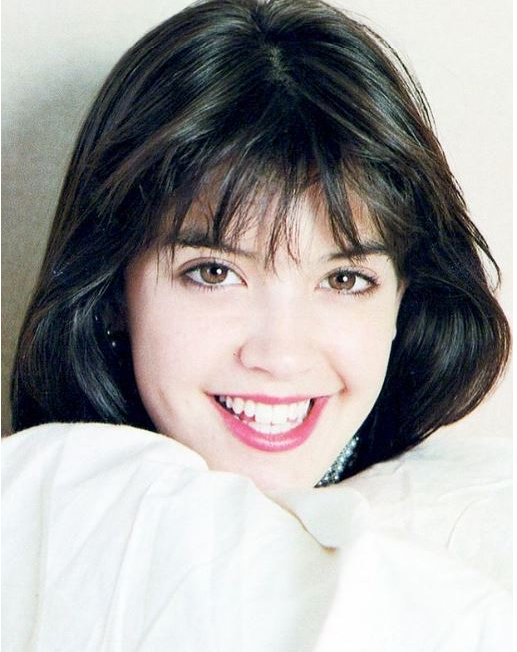
  • Phoebe Cates is still stunning…

    Phoebe Cates is still stunning…

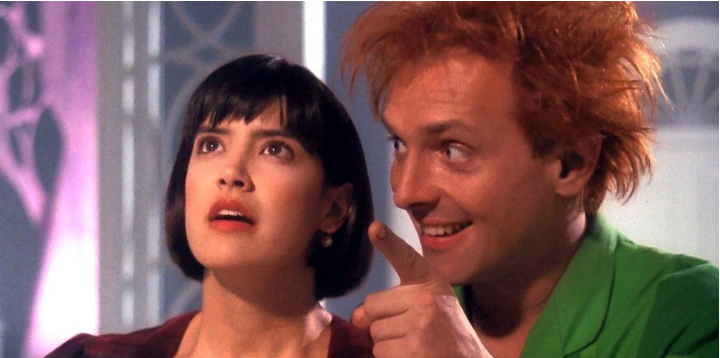
    Phoebe Cates is probably best known for her role where she starred as Kate Beringer and was instantly recognisable to most American teens of this era.

    After starring in some of the most popular teen films of the previous decade, she disappeared from the entertainment industry in the middle of the 1990s.

    What Phoebe Cates has been doing since her days as a movie star and why she departed the big screen are detailed here.

    Phoebe Cates is still stunning…

    Born in New York City on July 16, 1963, Phoebe Cates appeared in 16 movies over a period of 12 years, ranging from juvenile comedies like Fast Times at Ridgemont High to 1991’s Drop Dead Fred.

    But, this aspiring actress abruptly left the spotlight in the middle of the 1990s, and Phoebe Cates’ name disappeared from movie credits.

    How did Phoebe Belle Cates fare? What is she doing right now? And how does she even appear right now?

    Joseph Katz, a Broadway producer, and Phoebe Cates’ uncle were prominent figures in the entertainment industry who worked on multiple Academy Awards shows as well as TV specials.

    Her maternal grandfather was a Chinese-Filipino who was born in Shanghai. In the meantime, Cates’ grandmothers were both Russian-Jewish.

    A close friend of the family was the late Andy Warhol, a well-known artist who passed away in 1987.

    Cates attended the elite Julliard School, the Professional Children’s School, and the Hewitt School for his schooling.

    Phoebe Cates began modeling at the age of 10, and she began to feature in teen-oriented publications even before she became an actress. 

    But at the time, Cates’ dream job was to become a dancer.

    When Phoebe Cates was 15 years old, she suffered a catastrophic knee injury and was forced to stop attending a ballet school.

    Phoebe Cates actually began her career in modeling about this time, although she never really enjoyed it because, in her own words, “it was basically the same thing over and over… 

    I only did it for the money.

    The movie Paradise featured Phoebe Cates in her acting debut (1982). During a screen test in her native New York, Cates was chosen to star in this Israeli-produced picture.

    According to reports, Cates was embarrassed by the finished product, which is commonly regarded as a Blue Lagoon imitation.

    However the same year after this movie, she gave a standout performance as Linda Barrett in Fast Times at Ridgemont High.

    Both of these early films featured varying degrees of nudity, but one felt much more difficult to film than the other, Cates said in an interview from 1982.

    She claimed, “I was barely 17 when I filmed my nude sequences in Paradise. “Because they were difficult to justify, they were serious and more challenging. Yet, it was simple because the topless moment in Fast Times at Ridgemont High was humorous.

    Several future Hollywood stars, including a teenage Nicolas Cage, Sean Penn, Eric Stoltz, and Jennifer Jason Leigh, may be seen in this coming-of-age classic.

    No one of the young performers, according to Penn, “had any clue it would take on a life of its own,” when he first stated that the young players were unaware of how well-known and famous the movie would become.

    Due to the cultural and historical significance of Fast Times, it has even been conserved in the US National Film Registry.

    Phoebe Cates made an appearance in the 1983 comedy Private School, contributing her vocal abilities to the songs Just One Touch and How Do I Let You Know on the soundtrack.

    In the iconic 1984 comedy-horror film Gremlins and its 1990 sequel, Gremlins 2: The New Batch, Phoebe Cates also played Kate Beringer.

    Cates played Patty Winston in Date with an Angel, a fantasy rom-com that received negative reviews, in 1987.

    Despite coming from a New York family of Broadway producers, Cates didn’t start acting in plays until the middle of the 1980s. She performed in the off-Broadway musicals Rich Relations and The Nest of the Wood Grouse during this decade, and The Tenth Man marked her Broadway debut.

    Phoebe Cates has frequently stated that, despite the popularity that came with her roles in Fast Times and Paradise, she greatly loves performing on stage over film. She has also noted that there are more fascinating and varied roles for women in theater than there are in movies.

    In 1988, Cates said, “I think of theater as what I prefer to do best. As an actress, I’ve only felt content for roughly two years. I hardly ever watch my filmmaking.

    Nonetheless, Cates continued to work in films in the late 1980s, starring with Bridget Fonda in the comedies Shag and Big City. Regrettably, none of these films did well at the box office, and the most of them received negative reviews.

    Phoebe Cates played the title role in the 1994 historical comedy Princess Caraboo. It is based on the true story of Mary Baker, who in the 1800s used the alias Princess Caraboo to trick a British town into believing she was a foreign monarch.

    Jim Broadbent, Wendy Hughes, Kevin Kline, John Lithgow, Stephen Rea, and Phoebe Cates

    Kevin Kline, who plays Frixos, a butler who is uneasy about Caraboo’s pranks, co-starred with Cates in the movie.

    In 1991, Drop Dead Fred was released. Phoebe Cates plays the female character, a lonely teenager with a crazy imaginary companion. Although the film received negative reviews when it first came out, it has since gained a sizable following, earning Phoebe Cates the distinction of becoming a cult classic star.

    Nonetheless, Cates abruptly left the spotlight after this film. What led to Phoebe Cates’ abrupt adjustment in career direction? Not any more than she opted for her family above celebrity.

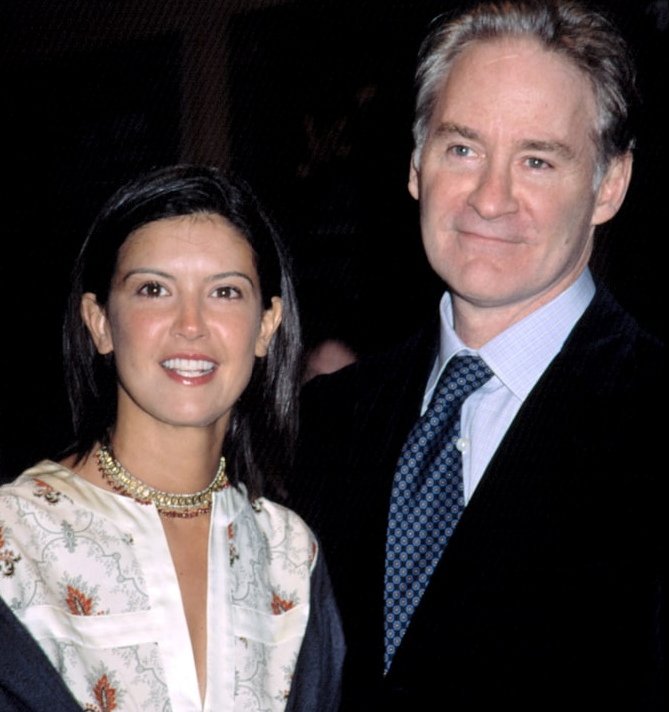
    Currently, Pheobe Cates and Kevin Kline are wed. While attending a casting for the part of Meg Tilly in the movie The Big Chill in 1983, Phoebe Cates met the actor Kevin Kline, who she has been married to for 32 years.

    Kline, who won an Oscar, is most recognized for her role in A Fish Named Wanda.

    After being married to Kline in 1989, Phoebe Cates adopted the name Phoebe Cates Kline. Owen Joseph Kline and Greta Simone Kline, the couple’s two children, were born in 1991 and 1994, respectively.

    Phoebe Cates left the glamorous world of Hollywood because she wanted to put her family first, but ten years later, she also pursued a different line of work.

    Phoebe Cates established a store on Madison Avenue in New York City in 2005, not far from her house. Blue Tree offers everything from clothing to jewelry to books to stuffed animals to fragrances!

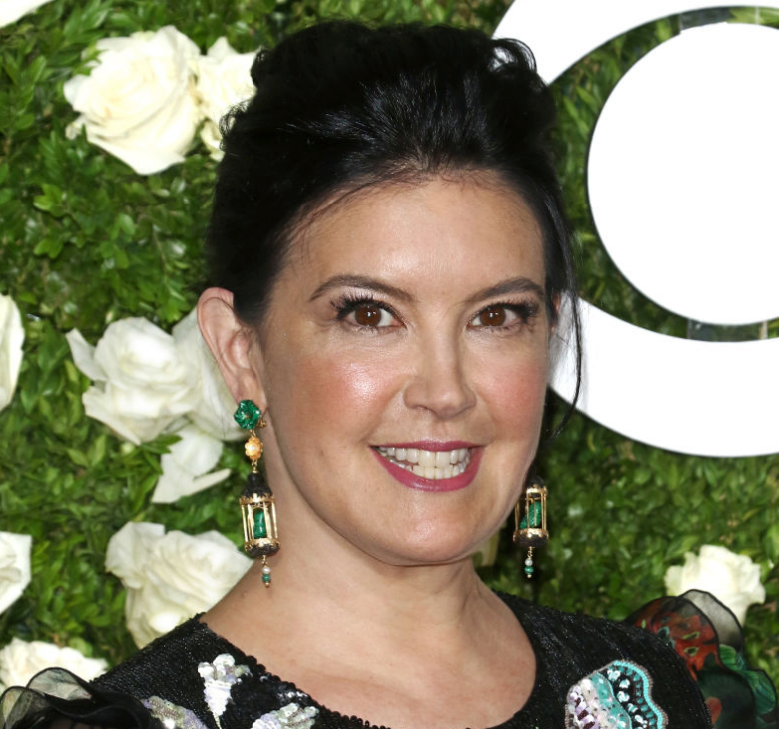
    Phoebe Cates, who is 58 years old, periodically resumes her acting career but hasn’t been in a major motion picture since 2001’s The Anniversary Party.

    As a favor to the movie’s director, Jennifer Jason Leigh, who Phoebe Cates met when they co-starred in Fast Times at Ridgemont High, Phoebe Cates made a cameo in the movie with her husband and kids.

    Jennifer Jason Leigh, who just starred in the 2018 horror movie Annihilation, has had a more traditional Hollywood career.

    In the 2015 video game Lego Dimensions, Cates voiced her previous Gremlins character.

    It’s energizing to hear the story of Phoebe Cates, who is thriving in her middle age, in an era when you hear so many tales about show business kids who went on to experience serious bad challenges in their adult lives.

    You will undoubtedly concur with us in sending Phoebe Cates and her family the most best wishes for the future!

  • 1 | CHAPTER 1: MY SISTER SAW MY WORLD

    1 | CHAPTER 1: MY SISTER SAW MY WORLD

    The first thing Hollywood ever taught me was that cruelty looked better under expensive lighting.

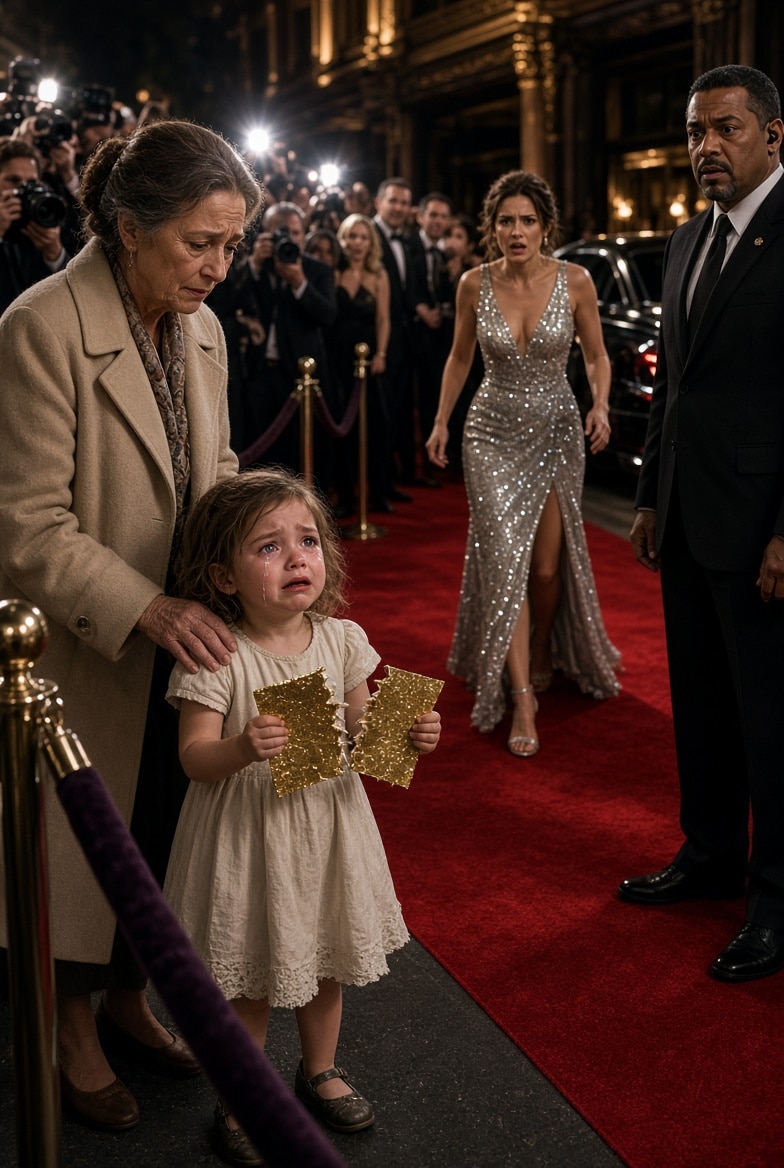
    By the time my limousine reached the premiere, the entire block had been bleached into an artificial version of night. White towers washed the theater facade until every crack in the old stone disappeared, camera flashes burst against the barricades in nervous waves, and hundreds of people stood beneath enormous photographs of my face while pretending they had come only to see a movie. Through the smoked window beside me, I watched assistants run along the carpet with headsets pressed to their ears and security men reposition velvet ropes by inches, moving human bodies with the same precision other people used to arrange furniture.

    My stylist had spent forty minutes making sure the silver dress fell perfectly across my hips. A jeweler’s representative had fastened a diamond necklace around my throat and reminded my publicist twice that the piece was insured for more money than the house where I grew up. Someone had powdered the skin between my collarbones because the sponsor’s photographer disliked shine, while somebody else had checked my teeth for lipstick before the car door opened. I had long ago learned that being looked at by millions of people required an astonishing amount of work to make it appear that nobody had touched you.

    Maisie had texted me twenty-seven minutes earlier.

    We’re here!!! Grandma says I’m using too many exclamation points.

    I had smiled when I read it. Ruth had been policing punctuation since I was twelve, despite being perfectly willing to send me six question marks whenever I failed to answer my phone, and I could picture the expression she would have made while Maisie typed beside her. They had flown in from West Virginia that morning for the first Hollywood premiere either of them had ever attended, and I had spent the previous week checking their travel arrangements myself because I no longer trusted excitement to survive professional handling.

    The final message from Maisie included a photograph taken inside the hotel elevator. She wore the pale blue dress we had chosen together over video, the kind of department-store dress that cost less than one sleeve of what I was wearing, and Ruth stood beside her in the camel-colored coat she had owned for as long as Maisie could remember. Ruth’s silver hair had been brushed neatly behind her ears, and she held up two fingers in the little victory sign she used whenever she disliked having her photograph taken but understood resistance was pointless.

    I stared at that photograph until my publicist, Maren Holt, gently touched my knee.

    “Nora, they’re ready for you. We are already four minutes behind the studio schedule, and Cartier wants the necklace visible in the first full-length shots before you turn toward the cast wall.”

    Maren was good at her job because she could say sentences like that without sounding absurd. She had spent twelve years translating corporate priorities into human instructions, and I had spent the last six learning how to follow them without visibly checking where one person’s wishes ended and another person’s ownership began. I handed her my phone before the door opened, because phones ruined silhouettes, and placed my fingers around the cool metal handle.

    “I need five minutes with Ruth and Maisie before we go inside. They should be coming through family check-in now.”

    Maren glanced toward the production assistant outside the car. “I’ll have someone locate them and bring them to the family holding area. Stay on carpet first, because if you leave your position once you’re out there, we’ll have fifteen photographers screaming at the wrong people.”

    I should have insisted.

    That thought would return to me later with such persistence that it became difficult to distinguish memory from punishment. At the time, however, the instruction sounded ordinary, and ordinary instructions were the reason my life worked at all. I nodded, the door opened, and a hundred people shouted my name before both of my feet reached the pavement.

    I had been famous for three years by then, which was long enough to know that photographers did not really call your name because they wanted your attention. They used it the way fishermen used movement on a line, pulling your eyes toward whichever lens had the best angle and keeping your face turned long enough to make their image different from the twenty other images taken in the same second. I gave them the version of Nora Bellamy they expected: chin slightly down, shoulders loose, smile warm enough to suggest pleasure without looking overeager, one hand placed where the jeweler had requested so the necklace remained unobstructed.

    There had been a time when attention made me shake. That evening, the machinery of it felt almost soothing because every expectation had been rehearsed, and rehearsed expectations were easier than real people. I moved from mark to mark as assistants guided me beneath sponsor logos, answered two harmless questions about the film, and let an entertainment reporter tell me I looked “effortlessly radiant” after six people had spent most of the afternoon manufacturing the effortlessness.

    Then I saw Ruth.

    She was standing beyond the second velvet rope near a sponsor entrance, half obscured by a group of guests waiting to be photographed against the branded wall. Even from twenty yards away, I recognized the way she held her shoulders when somebody was speaking to her as though she were slow rather than unable to speak. Her chin lifted slightly, her hands remained controlled at waist level, and she watched the other person’s mouth with the patient concentration she had developed after decades of strangers assuming silence meant confusion.

    Maisie stood beside her.

    The pale blue dress looked softer beneath the hard carpet lighting, and her hair had already begun losing the curls the hotel stylist had offered to fix for free. She was holding both family credentials in one hand and Ruth’s fingers in the other, while a woman in a black sponsor-issued suit examined them with an expression I knew immediately. It was the expression people used when they had already decided the answer and were continuing the conversation only because procedure required another thirty seconds.

    A reporter asked me something about working with the director.

    I smiled at him automatically.

    I have no memory of what I said.

    The woman speaking to my family was Lydia Crane, regional events director for one of the luxury sponsors. I had met her earlier that week during a rehearsal walk-through, when she had been perfectly pleasant and had spent ten minutes explaining how important “authenticity” was to the brand’s relationship with artists. From where I stood now, I watched her glance at Ruth’s coat, then at Maisie’s shoes, before returning her attention to the credentials in Maisie’s hand.

    Something in my stomach tightened.

    I turned slightly away from the photographer in front of me.

    Maren appeared at my elbow before I could move.

    “Nora, center camera first. Then I’ll find out what’s happening.”

    I looked at her. “That’s my grandmother.”

    “I know. Give me thirty seconds.”

    Thirty seconds had built my entire career.

    Thirty seconds while somebody checked with an executive. Thirty seconds before the car arrived. Thirty seconds while an assistant asked whether the producer was in a good mood. Thirty seconds outside doors where people with more power than I had decided whether I was worth remembering. I had become extraordinarily good at surviving thirty seconds.

    Maisie had not.

    Lydia spoke to a security supervisor, then pointed toward a narrow passage beside the theater where catering employees and technical crews had been moving throughout the evening. I could not hear her yet, but Maisie’s face told me enough. Her cheeks flushed first, then her mouth tightened, and she looked at Ruth the way she had looked at me as a child whenever she was trying not to cry in front of strangers.

    I left my mark.

    Several photographers immediately called for me to turn back.

    Maren caught my arm without gripping it.

    “Nora, let me handle this before you create something we cannot undo.”

    Her voice was low, almost gentle, and the sentence frightened me more than it should have. In my world, anything that could not be undone usually mattered more than anything already happening to someone else.

    I stepped away from her.

    By the time I reached the rope, Lydia was speaking loudly enough for the nearest guests to hear.

    “These credentials are for family access, but this section is sponsor-facing and already overcrowded. We can route you through service and bring you inside without creating a scene.”

    Maisie stared at her.

    “We didn’t make a scene. We just got here.”

    Her Appalachian vowels were softer than mine used to be, but they were still unmistakable. I heard them catch against the polished accents around her and felt an old, involuntary shame move through my body before anger crushed it. For years people had paid coaches to remove those sounds from my mouth, and now I heard them in my sister’s voice as if someone had opened a room inside me I had spent too long keeping locked.

    Lydia gave her a restrained smile.

    “I’m not saying you did anything wrong. I’m saying there is a more appropriate entrance for family members who aren’t participating in sponsor photography.”

    Ruth raised both hands.

    I knew the signs before she finished them.

    WE WERE TOLD THIS ENTRANCE. ASK NORA.

    Lydia watched without understanding.

    Maisie translated.

    “My grandma says Nora told us to come here. Nora Bellamy. She’s my sister.”

    A man behind them laughed quietly.

    I turned toward the sound and recognized a lifestyle influencer whose team had spent most of the week negotiating carpet placement as though international diplomacy depended on it. He leaned toward the woman beside him and murmured something I could not hear, but both of them looked at Ruth’s coat afterward.

    Lydia’s patience thinned.

    “Everyone outside this rope knows somebody tonight. I am not questioning your story, sweetheart, but this is a controlled area and I need you to cooperate with the staff.”

    Maisie’s grip tightened around the credentials.

    “She isn’t a story. She’s my grandma.”

    That sentence landed harder than anything else had.

    Ruth touched Maisie’s forearm and signed slowly enough that my sister could not pretend she had misunderstood.

    LET’S GO HOME.

    Maisie shook her head, eyes shining now.

    Ruth signed again.

    THIS IS NOT WORTH IT.

    I was close enough by then to see the small details people on the carpet would never notice: the frayed seam near one pocket of Ruth’s coat, the pale indentation where Maisie had bitten the inside of her lip, the slight tremor in Ruth’s left hand that appeared whenever she was trying very hard not to show anger. Those details belonged to the world I came from, a world where dignity was often the only thing available when money, status, and access belonged to somebody else.

    Lydia finally noticed me.

    Her entire face changed.

    “Nora. I was just trying to redirect your family through the private service route because this section is extremely congested, and I didn’t want your grandmother or sister caught in the sponsor line.”

    The explanation was smooth enough that I understood immediately why she had reached her position. She had not said Ruth looked poor. She had not called Maisie a liar. She had not explicitly said they were embarrassing. Every insult had been translated into logistics, which was the language powerful people used when they wanted cruelty to sound like efficiency.

    Maisie looked at me.

    Her expression contained relief, humiliation, and something worse beneath both: uncertainty over whether I would agree with the woman in the expensive suit.

    I had seen that uncertainty before.

    Years earlier, when Maisie was small enough that her feet did not touch the floor from a kitchen chair, she had learned to look at me whenever someone treated Ruth badly because I was the one who could speak aloud. I had been twelve when our family began depending on my voice, and the habit had never entirely left us. Even after money changed everything else, some part of Maisie still expected me to be the person who explained to the world that Ruth understood perfectly well, that silence was not stupidity, that our family did not need permission to exist in a room.

    I looked at Lydia.

    “What exactly did you mean by ‘service route’?”

    She maintained the professional smile.

    “The corridor on the east side. It would get them inside faster and keep them away from the photo congestion. I thought it would be more comfortable for everyone.”

    “For everyone?”

    Lydia hesitated.

    Behind me, photographers had begun turning their cameras toward the conversation. Maren was approaching quickly now, accompanied by a studio publicity executive whose face had already acquired the pale concentration of a person calculating consequences.

    Lydia lowered her voice.

    “Nora, I’m trying to protect the carpet. They’re not styled for sponsor photography, your grandmother clearly isn’t comfortable with press interaction, and your sister is a minor. If we move them through service, it keeps the visual cleaner and gets them seated without any unnecessary attention.”

    Cleaner.

    Of every word she could have chosen, that was the one she gave me.

    For a moment I was eighteen again, standing inside my first Beverly Hills party in a borrowed dress while people who had never missed rent decided whether my accent made me charming or cheap. I remembered learning which fork to pick up only after watching the woman beside me, lowering my voice because somebody told me Appalachian women sounded “harsh” on tape, and smiling when an agent suggested I stop mentioning West Virginia unless an interviewer specifically wanted a poverty story. I had spent years becoming visually clean enough for rooms like this one.

    Now my sister stood in front of me wearing a seventy-dollar dress.

    My grandmother wore the coat she had bought before I booked my first speaking role.

    And the industry that had spent years sanding every visible trace of where I came from had finally looked at the two people I loved most and called them clutter.

    I reached behind my neck.

    Maren understood before Lydia did.

    “Nora, don’t.”

    The clasp of the diamond necklace was tiny and difficult to manage with cold fingers. A jeweler’s representative hurried toward us when she saw what I was doing, but I kept working until the weight lifted from my throat. I placed the necklace in Maren’s palm, watching her close her fingers around several million dollars of somebody else’s property.

    “What are you doing?” she asked quietly.

    I looked toward the sponsor wall where my name, my film, and Lydia’s brand had been arranged together as though none of us could exist independently.

    “I’m making the carpet cleaner.”

    Maren’s eyes closed for half a second.

    I turned toward Lydia.

    “My grandmother does not need to speak for you to treat her like an invited guest. My sister does not need a stylist for you to believe the credential in her hand. They flew across the country because I asked them to be here, and you were about to send them through the same corridor used for equipment because their clothes made you nervous about photographs.”

    Lydia’s jaw tightened.

    “That is not what I said.”

    “You said it would look cleaner.”

    Several cameras were close enough now that I could hear shutters operating continuously.

    Lydia glanced toward them.

    “I said the carpet would be easier to manage if your family used the private route. Please do not turn an operational decision into something it was never intended to be.”

    That was another sentence I knew too well.

    Intent.

    Hollywood loved intent because intent lived inside people where cameras could not record it. Contracts recorded actions, emails recorded language, money recorded ownership, but intent remained private enough for everyone to claim innocence after the damage was visible.

    I looked at Maisie.

    She had started crying without making any sound. Tears moved over her flushed cheeks while she kept both credentials pressed against her stomach, and the sight produced an old kind of anger in me, one connected to every moment I had arrived too late to help her. I wanted to tell her that I had built all of this so nobody would ever look at her that way again, but the sentence would have been obscene while she stood on the wrong side of a velvet rope at my premiere.

    I held out my hand.

    “Come here.”

    Maisie did not move immediately. She glanced toward Ruth, who watched me with the expression she had worn through almost every terrible decision of my adolescence: fear carefully hidden beneath trust.

    I signed to her.

    COME WITH ME.

    Ruth’s eyes moved toward the cameras.

    YOUR WORK.

    I understood what she meant. She was reminding me that dozens of people depended on this premiere, that leaving the sponsor position could create consequences beyond my own reputation, and that Ruth had spent most of my life refusing to become the reason I surrendered an opportunity.

    I signed again.

    YOU ARE MY FAMILY.

    Her mouth tightened.

    Then she asked the question with her hands.

    AND TOMORROW?

    I had no answer.

    That was the part no camera could capture.

    It was easy to choose family with two hundred lenses watching.

    Tomorrow would be meetings, phone calls, contracts, damage assessments, and people explaining how one impulsive gesture had affected commitments worth more than Ruth’s house had cost several times over. Tomorrow the industry would ask whether I had meant to insult a sponsor, whether the brand relationship remained viable, whether my behavior created insurance concerns, whether the actress they had invested in was becoming difficult.

    Ruth knew that.

    She had watched me pay for every rung of the ladder even when I refused to tell her the exact currency.

    Maisie looked between us.

    “I don’t want you to get in trouble because of me.”

    Her voice broke slightly on the final words, and something inside me went cold.

    I had spent years hearing versions of that sentence from the people I loved. Ruth did not want to make my schedule difficult. Maisie did not want to interrupt an interview. Somebody at home always understood that Nora had work, Nora had meetings, Nora had people waiting, Nora had crossed too much distance to turn around now.

    For once, I hated the understanding more than I hated the humiliation.

    I stepped over the velvet rope.

    The security man beside Lydia instinctively raised one hand, then froze when he recognized who he was about to stop.

    Photographers shouted my name.

    I took Maisie’s hand with my right and Ruth’s with my left.

    Lydia moved closer.

    “Nora, please think about what this is going to look like.”

    I met her eyes.

    “That’s the first thing everyone here has been thinking about all night.”

    I turned toward the carpet.

    “If they don’t belong on it, neither do I.”

    The noise changed instantly.

    Before that moment, the crowd had been loud in the organized way premieres were loud, divided into predictable streams of names, interview questions, instructions, and applause. Now the sound became uncontrolled. Photographers surged against their marks, reporters called over one another, studio staff began moving toward us from three directions, and phones lifted behind the barricades as guests realized something unscripted had finally happened.

    Maisie’s fingers became painfully tight around mine.

    I felt her hesitate.

    “Just walk with me,” I told her. “You do not have to look at anybody you don’t want to look at, and you do not owe one person here a smile.”

    Ruth touched my arm and signed with her free hand.

    SLOW DOWN. SHE’S SCARED.

    I slowed immediately.

    That small instruction did more to steady me than anything Maren or security could have said. Ruth had spent my entire life bringing me back to whatever human being existed beneath the emergency, and even now, when she had every right to be furious, her attention remained on Maisie’s breathing.

    We moved onto the carpet together.

    I could feel Maisie trying to make herself smaller beside me, shoulders slightly rounded and chin lowered whenever someone shouted her name after learning it from another reporter. I hated the speed with which the machinery adapted. Five minutes earlier, she had been undesirable background; now she was content. Photographers who would not have known her from any other child began calling for her to move closer to me, turn toward the light, lift her face, show the dress, hug her sister.

    I stopped at the first photo mark only because Maisie stopped.

    She looked at the photographers, then at me.

    “Do I have to?”

    “No.”

    She exhaled.

    Ruth squeezed her hand.

    For a few seconds, neither of them moved into the positions the photographers requested. I stayed where they stayed, forcing everyone else to adjust around us. The image that eventually traveled around the world was not the one any sponsor had planned: Ruth in her old coat, Maisie with tears still visible on her face, and me standing between them without the diamond necklace the brand had paid to place around my throat.

    People later called the photograph defiant.

    I remember feeling ashamed.

    Not of them.

    Of how familiar their embarrassment looked to me.

    The three of us reached the end of the carpet nearly fifteen minutes later. Maren had managed to prevent most reporters from physically closing in, and the studio moved us into a private lounge before the screening began, where somebody brought water nobody drank. Maisie sat on a sofa beside Ruth and stared at her credentials as though she still did not trust them.

    I removed my shoes because my feet had begun to ache.

    The room became quiet enough for the muffled noise outside to sound unreal.

    Ruth took a small notepad from her purse, although she rarely used paper with me anymore. She wrote slowly, then turned it toward me.

    YOU DID NOT HAVE TO DO THAT IN FRONT OF EVERYONE.

    I read it twice.

    “I know.”

    She wrote another sentence.

    I AM GLAD YOU DID IT FOR HER. I AM WORRIED YOU HAD TO DO IT FOR YOURSELF.

    That was Ruth’s way. She could not speak, but she had never needed many words to find the place I was hiding from.

    Maisie looked toward me.

    “Are they going to fire you?”

    Despite everything, I laughed.

    “No. Actors don’t usually get fired from movies after the movie is already finished.”

    She considered that carefully. “Are they going to be mad?”

    “Yes.”

    “How mad?”

    I leaned back against the sofa and looked at the ceiling. “Probably the expensive kind.”

    That made her smile for the first time since I found them outside.

    Ruth tapped the table twice to bring my attention back to her hands.

    YOU ARE JOKING. YOU ARE AFRAID.

    I looked away.

    There were things Ruth knew because she had raised me and things she knew because fear changed my body in the same ways it had when I was poor. My shoulders became too still, my fingers searched for objects to straighten, and I started making jokes before anyone else could name what was wrong. Fame had altered almost every external measurement of my life, but terror still used the same entrances.

    Maren entered several minutes later.

    She had removed her headset and looked older without it.

    “The good news is that the video is already everywhere, and public reaction is overwhelmingly on your side. The bad news is that the sponsor considers the necklace removal a deliberate rejection of the placement agreement, and Lydia is telling people she was trying to protect your family’s privacy rather than exclude them.”

    I watched Ruth’s expression change at the word privacy.

    Maren noticed too.

    “I’m not saying I believe her version. I’m telling you what we are going to be dealing with after the screening.”

    Maisie lowered her eyes.

    I reached across and covered her hand with mine.

    Maren continued only after she saw the gesture.

    “The studio wants you inside before the opening remarks. They will seat Ruth and Maisie beside you if that is still what you want, and nobody is going to challenge their credentials again tonight.”

    “If that is still what I want?”

    Maren exhaled.

    “Nora, I am choosing my words carefully because you are angry and because your family has been treated badly. You also need to understand that you just created a global news cycle during the launch of a film with hundreds of millions of dollars attached to it. I am not telling you to apologize. I am telling you that every person in this building is about to decide what your gesture means for them.”

    I knew she was right.

    That was the worst part.

    Hollywood had taught me to recognize when somebody was exploiting me, but it had also taught me that exploitation could coexist with legitimate obligations. The studio had employees, investors, distributors, crews, and partners whose lives could not be reduced to villains simply because one sponsor representative had looked at my grandmother’s coat and decided she belonged near a service corridor.

    I looked at Maisie.

    She was tracing one thumb over the raised lettering on her credential.

    “What do you want to do?” I asked.

    She glanced toward Ruth, then back at me.

    “I still want to see your movie. I came all this way.”

    “Then we’re watching it.”

    Maren nodded and started toward the door.

    Before she reached it, Ruth lifted one hand.

    Maren stopped.

    Ruth signed to me, expecting translation.

    TELL HER THANK YOU FOR NOT LYING TO YOU.

    I translated.

    Maren looked surprised.

    Then Ruth continued.

    TELL HER THAT DOES NOT MEAN SHE GETS TO DECIDE FOR YOU.

    Maren gave a tired smile that contained more respect than offense.

    “I think I understood that part without translation.”

    For the first time that night, Ruth smiled too.

    We entered the theater through an interior corridor rather than returning to the carpet. I sat with Maisie on my right and Ruth on my left, which meant that for nearly two hours I could feel both of them beside me whenever the audience laughed, gasped, or applauded. Maisie whispered twice during the opening act to ask whether a scene had really been filmed in Paris, then covered her mouth because she thought she had broken some rule about talking during my movie.

    I barely saw the film.

    I had watched every scene too many times already, but that was not why. My attention kept returning to the feel of Maisie’s shoulder against mine and the realization that I had spent years chasing rooms grand enough to impress her, only to discover that the first time she entered one, it made her feel ashamed of where we came from.

    Halfway through the film, she leaned closer.

    “You looked scared when that lady said we should go around the side.”

    I turned toward her.

    “I was angry.”

    “You looked scared too.”

    Children become dangerous observers when adults forget they are watching.

    I took several seconds before answering.

    “I was scared.”

    “Of her?”

    The question would have been easier if the answer were yes.

    “No. Of everything that comes after people like her decide you’re difficult.”

    Maisie frowned because the explanation belonged to a world she had not entered yet. I was grateful for that confusion. Ruth touched my wrist in the darkness and signed against her own palm so the movement would remain small.

    ENOUGH FOR TONIGHT.

    She was right.

    Maisie did not need my confession before she had even finished watching my face on a screen thirty feet high.

    I turned back toward the film.

    The audience applauded when the credits began, and I stood when I was supposed to stand. I smiled when the director hugged me, thanked the cast, thanked the studio, and allowed people to photograph me with Ruth and Maisie in the aisle. By the time we reached the private exit, the story had already transformed into something cleaner than what actually happened.

    MOVIE STAR DEFENDS MUTE GRANDMOTHER AND LITTLE SISTER.

    NORA BELLAMY WALKS OFF SPONSOR CARPET AFTER FAMILY HUMILIATED.

    HOLLYWOOD’S MOST POWERFUL SISTER?

    I read the headlines in the back seat while Maisie slept with her head against Ruth’s shoulder.

    People loved the story.

    They loved the clarity of it.

    A cruel woman had insulted my family, and I had chosen love over luxury. The necklace came off. The sister took my hand. The mute grandmother walked beside us. The cameras recorded justice before the movie even started.

    Nobody knew how badly I wanted to believe that version.

    Nobody knew how many times Maisie had needed me before there were cameras.

    Nobody knew how often Ruth had watched me return home with expensive gifts because gifts were easier to deliver than time.

    Nobody knew what I had already agreed to, swallowed, rewritten, or allowed other people to rename in order to reach a point where walking off a sponsor carpet looked brave instead of career-ending.

    Everyone thought that was the night I chose my family over Hollywood.

    They were wrong.

    I had chosen Hollywood over them in smaller ways for years, and one beautiful photograph could not reverse the arithmetic.

    My phone vibrated in my hand.

    The number was not saved.

    I recognized it anyway.

    I had deleted Graham Kessler’s contact eighteen months earlier, but forgetting his number would have required forgetting the years of my life during which seeing it appear on a screen could change the temperature of an entire room.

    The message contained no greeting.

    Careful, Nora. Family makes you look human. Human makes you expensive to control.

    I read it once and felt the muscles along my back tighten against the leather seat. Outside the window, Los Angeles moved past us in polished black glass and reflected light, while Ruth slept beside the sister I had promised my whole life to protect.

    Another message appeared before I could lock the screen.

    You should know better than anyone what it costs to stay inside the rope.

    I turned the phone facedown against my thigh.

    Maisie shifted in her sleep and reached blindly across the seat until her fingers found mine. I held on without waking her, listening to Ruth’s quiet breathing while the city carried us toward a hotel guarded by men who knew my name.

    For the first time that night, the photographers were gone.

    That was when I became afraid.

  • The Silver Key Beneath the Frosting

    The Silver Key Beneath the Frosting

    The silence in the Rochefort estate garden was not polite; it was suffocating.

    Three hundred members of high society—senators, venture capitalists, socialites adorned in South Sea pearls and bespoke silk—stood frozen like marble statues against the backdrop of manicured boxwoods and shimmering fairy lights. In the middle of the limestone terrace, next to a five-tier grand velvet cake imported that very morning from Paris, knelt Damon Cross.

    He was twenty-nine years old, the reclusive titan behind the Cross Global Logistics and Defense network, a man whose signature could freeze sovereign accounts and whose silence terrified boardroom directors across three continents. Yet right now, the tailored fabric of his two-thousand-dollar Tom Ford trousers was sinking directly into the wet grass.

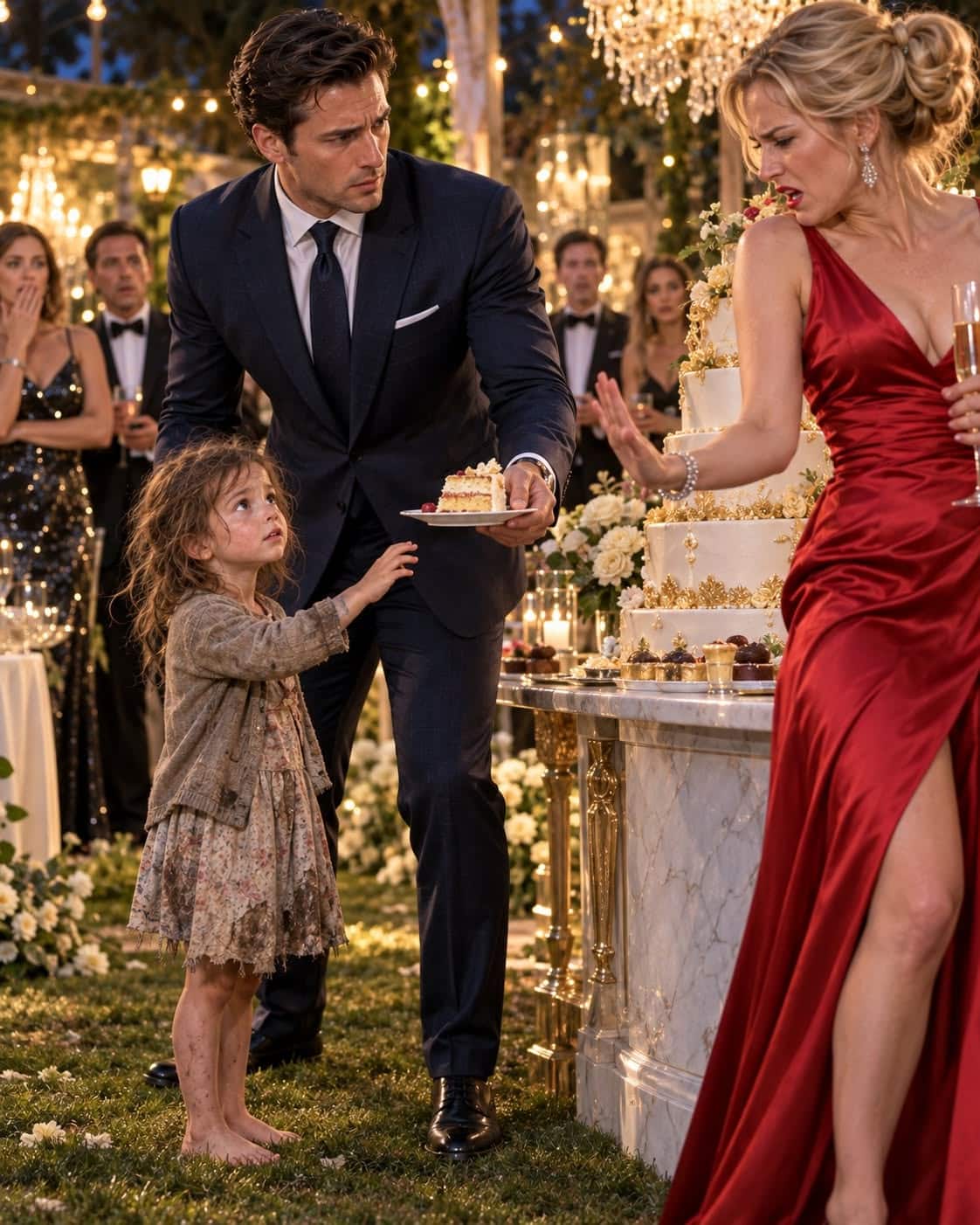
    He held a white porcelain plate. On it rested a thick slice of cake topped with gold leaf and a ripe crimson strawberry.

    “What’s your name?” Damon asked again. His voice was shockingly gentle, a low baritone stripped entirely of the cold steel that usually made grown men tremble.

    The little girl looked down at the plate. Her tiny, cracked lips trembled. She smelled of rain-soaked cardboard, damp earth, and the bitter copper tang of pure fear. Her bare feet were caked with grey street grime, tiny cuts lining her arches.

    “L-Lily,” she whispered. Her voice sounded like dry leaves rustling across concrete. “Just Lily, sir.”

    “Damon, this is absurd!” Elisa Rochefort’s voice shattered the hush, sharp and grating like broken glass thrown across porcelain. She pulled her ruby-encrusted Cartier bracelet higher on her wrist, her eyes blazing with indignation. “She is a street urchin who snuck through the service gate. She could be carrying disease! Security is already en route. Hand that plate to the staff and get up. You are embarrassing both of our families before the press.”

    Damon did not stand. He did not even blink.

    Instead, he watched Lily’s trembling fingers reach out. She didn’t grab the cake greedily, the way an unruly intruder would. She took the single strawberry with agonizing slowness, clutching it as though it were made of spun glass, afraid that breathing on it might cause it to vanish. When her tongue touched the fruit, a single, fat tear rolled down her hollow cheek, carving a clean river through the smudge of soot on her face.

    “Is it sweet, Lily?” Damon murmured.

    She nodded rapidly, tears falling faster. “Yes, sir. I… I didn’t mean to steal. The sign outside had pictures of bread. The lady with the kind face on the poster said… said no one goes hungry here.”

    “The poster lied,” Damon said quietly. “Or rather, the people who paid for it did.”

    “Damon!” Elisa snapped, taking an aggressive step forward. Her red satin dress hissed against the manicured turf. “That is enough! You are acting completely unhinged. This is *my* foundation’s night! Julian!” She turned toward the perimeter, calling out to her father, Julian Rochefort, who was rushing over alongside three burly security guards in dark suits. “Escort this child off the property immediately. Throw her past the perimeter gates!”

    The largest guard reached a heavy, gloved hand toward Lily’s shoulder.

    Before the leather glove could make contact, Damon rose.

    He didn’t yell. He didn’t rush. But the temperature of the entire garden dropped ten degrees in an instant. Damon caught the guard’s wrist with his left hand. The grip was effortless, yet the guard’s knees buckled under the sheer, mechanical leverage, a sharp gasp tearing from the man’s throat.

    “If you touch this child,” Damon whispered, loud enough only for the front row of onlookers to hear, “I will ensure your family’s names are erased from every payroll within five hundred miles.”

    The guard pulled back frantically, his face pale as chalk.

    “Damon, are you insane?!” Julian Rochefort, the patriarch of the Rochefort dynasty, finally reached them, his graying temples glistening with sweat beneath the lantern glow. “Look around you! The media is filming! What will the investors say?”

    “I am the lead investor,” Damon said, turning cold, predatory eyes upon the older man. “Without Cross Capital, your little charity foundation is nothing more than an offshore tax shelter, Julian. And tomorrow morning, every dime I ever pledged to your family is terminated.”

    Gasps rippled through the gathered elite. Elisa’s jaw dropped, her aristocratic poise splintering into panic. “You wouldn’t dare… we are getting married in two months!”

    Damon ignored her. He turned back to the trembling child, crouching again. As Lily flinched backward, her oversized, torn collar slid slightly down her left shoulder.

    Beneath the tattered cloth, hanging from a frayed piece of fishing line, was a tarnished silver medallion.

    It was an intricately carved wolf devouring a serpent—the private crest of the Cross family. Not the public corporate logo, but the centuries-old, hand-engraved heirloom seal that had only ever been forged for four people in human history.

    Damon’s breath caught in his throat. The world vanished. The music, the lights, Elisa’s shrill complaints, the whispers of the elite—all of it faded into a deafening roar of white noise.

    Inside the back of that silver pendant was an engraving only one person had ever worn: *C.C. — Until the Stars Burn Out.*

    Clara Cross. His older sister.

    The sister who had allegedly died in a fiery offshore yacht explosion five years ago—the very explosion that had left Julian Rochefort as the sole administrator of her multi-billion-dollar trust.

    Damon reached out, his hand visibly shaking for the first time in his adult life. He gently lifted the cold silver disc between his fingers.

    “Lily,” Damon’s voice cracked, thick with an emotion no one in the city had ever heard from the ruthless billionaire. “Who gave this to you?”

    Lily looked at the pendant, then into Damon’s haunted eyes.

    “My mommy,” she whispered. “She said if she ever didn’t wake up… I had to find the man who wears the matching ring. She said his name was Damon.”

    The silence that followed was so profound that even the crickets in the boxwood hedges seemed to hold their breath.

    Julian Rochefort’s face drained of color, his skin turning the sickly hue of skim milk. He took an involuntary step backward, his polished Italian leather heel sinking into the grass. “That… that is impossible,” Julian stammered, his fingers clawing nervously at his silk tie. “The explosion… the Coast Guard report… everyone was lost at sea. Clara is dead. It was an accident—a tragic, documented accident!”

    “A documented accident,” Damon repeated.

    The words were soft, but they carried the terrifying weight of an approaching avalanche. He slowly stood up, towering over the older man. The cold, mechanical detachment that had made him a legend in global finance evaporated, replaced by something far more dangerous. The billionaire’s eyes locked onto Julian with a predator’s absolute focus.

    Elisa rushed forward, her panic overriding her manners. “Damon, you can’t possibly believe this filthy little liar! It’s a trick! Someone probably sold her that trinket on the black market, or she fished it out of a rubbish bin—”

    “Quiet, Elisa,” Damon whispered.

    It wasn’t a shout. It was a command so absolute that Elisa physically recoiled as if she had been struck.

    Damon turned back to Lily. His hands, usually so steady when signing multi-billion-dollar acquisitions, trembled as he gently scooped the little girl into his arms. She weighed next to nothing, a tragic testament to months of starvation. She buried her face into the tailored wool of his suit jacket, her small frame shaking with silent sobs.

    Damon looked past the sea of gaping socialites, past the trembling security guards, straight toward the estate’s grand security pavilion overlooking the gardens.

    “Marcus,” Damon spoke into the collar of his suit jacket, activating his encrypted private comms link.

    A sharp, digital click answered instantly. “Sir? We’re on standby outside the perimeter gates. SWAT teams and federal auditors are positioned at your command.”

    “Execute Protocol Zero,” Damon said, his voice cold enough to shatter glass. “Freeze every asset belonging to Julian Rochefort and the Rochefort Foundation. Seize all estate servers, security footage, and financial ledgers from the past six years. And deploy a medical extraction unit to the limestone terrace immediately.”

    “Right away, sir,” Marcus replied.

    Julian lurched forward, panic entirely breaking his aristocratic composure. “You can’t do this! You’ll destroy us! You’ll destroy the market stability—”

    “I am the market stability, Julian,” Damon interrupted, walking past the patriarch without sparing him another glance. “And you just built your entire empire on stolen ground.”

    As Damon carried little Lily past the five-tier velvet cake and down the grand stone steps toward a waiting private chopper, the fairy lights overhead flickered and died. High society stood frozen in the dark, watching the reclusive titan carry his niece away—not just to safety, but toward a reckoning that would shake empires to their core.

  • Part II: The Quiet Revenge and the Fall of the Queen

    Part II: The Quiet Revenge and the Fall of the Queen

    Part two and final story below:

    Behind the heavy wooden doors that closed with a deep thud, the noise of the photographers’ cameras outside faded into a distant whisper. Victoria Sterling was still standing near the red carpet, her hands trembling slightly and her emerald gown feeling as heavy as a ton. All eyes from the security guards and late-arriving guests were fixed on her.

    She quickly wiped a tear from her cheek, clutched her handbag tightly, and took a deep breath. “No,” she whispered to herself. “I will not be ruined by a child and a public reprimand.”

    Adjusting her posture, she held her head high and walked into the grand hall with measured steps, attempting to look as if nothing had happened. Her portrait of composure, however, shattered the moment she crossed the threshold. The board chairman, Julian Vance—Arthur Vance’s son—was standing near the cocktail bar.

    Rather than taking a seat at her table in the corner of the hall like an ordinary guest, Victoria pursued Julian to a quieter spot near the balcony.

    “Julian,” she whispered, her voice controlled yet dripping with poison. “Your father just made a public scene outside. He is giving center stage to a child with zero business experience, right in front of our biggest investors.”

    Julian turned toward her with a cold smile. “Victoria, I watched the entire scene unfold on the entrance security cameras.”

    “Then you know how irresponsibly he is acting!” she continued, stepping closer. “That girl is just a kid! I’ve contributed tens of thousands of dollars to this foundation. Do something before your father turns this evening into a circus!”

    At that exact moment, Arthur Vance’s voice resonated through the main stage microphone, interrupting their conversation. His voice was calm, yet filled every corner of the hall.

    “Ladies and gentlemen,” Arthur said, as the hall lights dimmed and a single spotlight focused on the stage. “Tonight, we are not merely celebrating the funds raised. We are celebrating the true architect of this educational program. When our board team failed to find a solution for distributing scholarships in low-income areas, it was a 14-year-old girl who developed our mathematical model and donated her entire $500,000 international prize money to this cause.”

    A wave of applause erupted across the hall. Victoria felt her stomach turn upside down.

    Mia walked toward the stage, took the microphone, and looked directly into the crowd. Her gaze rested, for a brief second, on Victoria standing back in the shadows.

    “Many people think authority comes from expensive dresses, titles, or where you sit at a table,” Mia said in a clear, confident voice. “But true leadership doesn’t claim space by pushing others out. It creates space for others to rise.”

    The crowd applauded even louder. The key investors stood up in a standing ovation.

    Julian turned back to Victoria, pulled an envelope from his inner jacket pocket, and handed it to her.

    “What is this?” Victoria asked, her hands trembling once again.

    “The notice for the upcoming board meeting,” Julian said quietly. “My father and I have decided to review your membership. Your conduct outside tonight wasn’t just a misjudgment, Victoria. It revealed exactly how you treat people when you think no one is watching.”

    “You can’t do this! I am one of your oldest investors!” she whispered fiercely, trying hard not to attract attention.

    “Investments buy a seat in the room, Victoria,” Julian replied, turning toward the stage. “But respect is never for sale.”

    Left entirely alone in the shadows of the hall while the city’s elite applauded Mia, Victoria realized that nothing could save her image now. She turned with slow steps and slipped out through the side door, unnoticed by anyone.

    Full Story :

  • Chapter 1 – The Empty PlateJonah Hale was still chewing when Celeste took his plate.

    Chapter 1 – The Empty PlateJonah Hale was still chewing when Celeste took his plate.

    There was no warning. No request. No reason he could understand.

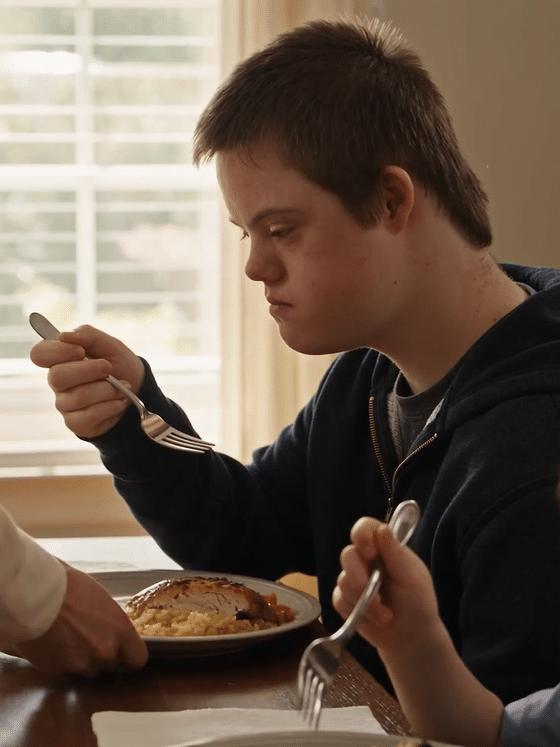
    The thirteen-year-old sat at the left side of the dining table in his charcoal hoodie, one hand curled carefully around his spoon. He had been eating slowly, as he always did, pausing between bites to separate the chicken from the rice.

    Across from him, three-year-old Milo kicked his sneakered feet beneath the chair.

    Beside Jonah, Poppy concentrated on spearing a carrot with her tiny fork.

    Celeste stood between them.

    “Almost finished?” she asked Jonah.

    Jonah nodded.

    He still had several pieces of chicken, a spoonful of rice, and vegetables on his plate.

    Before he could take another bite, Celeste reached down.

    She lifted his plate.

    Jonah’s spoon remained suspended in his hand.

    Celeste turned toward Milo and scraped every remaining piece of food onto her biological son’s plate.

    Chicken.

    Rice.

    Vegetables.

    All of it.

    Milo stared down at the unexpected pile.

    He didn’t laugh.

    He didn’t ask for it.

    He was three years old, and he looked almost as confused as Jonah.

    Celeste placed Jonah’s empty plate back in front of him.

    “There.”

    Jonah looked at the white ceramic surface.

    A smear of gravy remained near the edge.

    His fingers tightened around the spoon.

    Celeste had done things like this before, though rarely so openly. Sometimes Jonah’s dessert disappeared. Sometimes there was suddenly “not enough” chicken. Sometimes he was told he had already eaten when he knew he hadn’t.

    He had learned that arguing made everything worse.

    So he said nothing.

    His lower lip trembled.

    Poppy saw it.

    The little girl stopped eating.

    Her brown eyes moved from Jonah’s empty plate to Milo’s overloaded one, then up toward Celeste.

    Celeste ignored her.

    The dining-room door opened.

    Adrian Hale stepped inside.

    He had come home early from work because a client meeting had been canceled. His blue shirt was still tucked into dark trousers, his car keys in one hand.

    Celeste turned.

    For half a second, surprise flashed across her face.

    Then sweetness replaced it.

    “Adrian.”

    She looked down at the table.

    Jonah’s plate was empty.

    Milo’s was piled high.

    Poppy still had food.

    Celeste reacted instantly.

    She took her serving spoon, leaned toward Poppy’s plate, and transferred one small spoonful of rice and vegetables onto Jonah’s empty plate.

    Then she faced Poppy.

    “Give your brother some more, sweetheart.”

    Adrian smiled.

    It was small, tired, grateful.

    For months, he had wanted to believe the house was becoming a family again.

    Jonah noticed the smile.

    That hurt more than losing the food.

    His father thought Celeste was being kind.

    Jonah lowered his eyes.

    One tear slid silently down his cheek.

    Poppy pushed back against her chair.

    Her tiny finger rose.

    “She took all his food!”

    Adrian’s smile vanished.

    Celeste froze.

    “What?”

    Poppy pointed at Celeste but stared directly at her father.

    “She took all his food!”

    Adrian looked at Jonah.

    Jonah did not speak.

    He had become very good at not speaking when adults disagreed about what had happened to him.

    Adrian moved closer.

    “Jonah?”

    Celeste’s shoulders tightened.

    “He was practically finished.”

    Poppy frowned.

    She understood enough to know that was not true.

    Adrian noticed the difference between Milo’s overflowing plate and Jonah’s lonely spoonful.

    Something cold moved through him.

    Celeste glanced at Poppy.

    The warning in her eyes was subtle.

    Poppy saw it anyway.

    Then the three-year-old looked at her father.

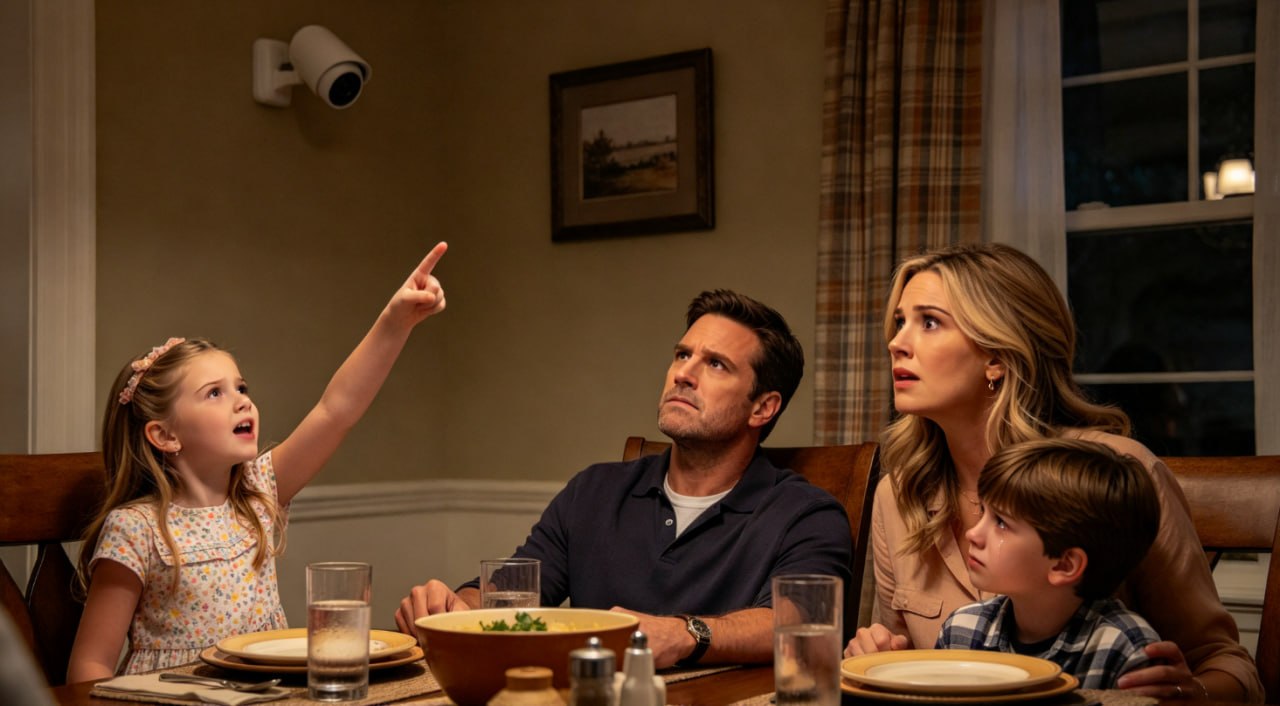
    “Dad, check the camera!”

    Adrian followed her pointing finger.

    High in the corner of the dining room was the small black security camera he had installed nearly two years earlier.

    He had almost forgotten it was there.

    Celeste had told him months ago that it had stopped working.

    Adrian looked up.

    Celeste looked up too.

    And for the first time since he had entered the room, she looked genuinely afraid.

    Her eyes widened.

    Her lips parted.

    She drew one sharp breath.

    Adrian looked from the camera to his wife.

    “Why are you scared?”

    “I’m not.”

    But she was.

    Jonah finally lifted his head.

    He watched his father’s face.

    Not the camera.

    Not Celeste.

    His father.

    Waiting.

    Adrian walked toward the corner.

    Celeste stepped in front of him.

    “That thing hasn’t worked in months.”

    “I know.”

    “Then why—”

    “I just want to see.”

    “There’s nothing to see.”

    The answer came too quickly.

    Adrian stopped.

    Poppy climbed down from her chair and wrapped both arms around his leg.

    Jonah remained seated.

    His food was still gone.

    That small fact suddenly felt enormous.

    Adrian looked at his son again.

    Jonah whispered the first words he had spoken since Adrian entered.

    “She does it when you’re gone.”

    The room became completely still.

    Celeste turned pale.

  • Read more…

    Read more…

    Chapter 1 – The Ultimatum

    The second my stepmother gave me twenty-four hours to hand over my bedroom or leave the house for good, everyone sitting around that dinner table expected me to put up a fight.

    They expected tears. They expected yelling. They expected me to beg my father to take my side.

    Instead, I smiled, said two words, and went upstairs to pack my things.

    Because there was one thing Gwendolyn didn’t know. Something my father had apparently forgotten too. And by the time they finally remembered, I would already be gone.

    Advertisement

    “Either give your master bedroom to your sister by tomorrow morning, or pack your bags and leave this house forever.”

    Gwendolyn didn’t ease into the subject. She suddenly erupted across the dinner table with such force that even the silverware seemed to rattle against the porcelain plates.

    For several long seconds, nobody said anything. The ceiling fan continued clicking above us. The refrigerator hummed somewhere in the kitchen. And my father, Samuel, stared down at his dinner as if the answer to the entire situation might somehow be buried beneath his mashed potatoes.

    Advertisement

    Across the table, my eighteen-year-old stepsister, Chloe, leaned back in her chair. A small, satisfied smile spread across her face. She looked exactly like someone who already believed she had won.

    I was twenty-five years old, sitting inside the same Phoenix house where I had spent most of my childhood. Every part of that house carried a memory. My mother had chosen the cherry wood cabinet in the dining room before she died. There was still a faded scratch beside the doorway from the year I had tried dragging my bicycle indoors during a thunderstorm. I remembered birthdays there. Christmas mornings. My mother laughing in the kitchen. My father carrying me upstairs after I had fallen asleep on the couch.

    Advertisement

    Gwendolyn had lived in that house for nine years. Yet somehow, she had become incredibly good at making me feel like I was the person who didn’t belong. The outsider. The guest. The inconvenience.

    And tonight, apparently, I had become an inconvenience because Chloe wanted my bedroom.

    Not just any bedroom. Mine. It was the biggest room upstairs, with tall windows, hardwood floors, a private balcony, and warm afternoon sunlight that poured through the glass every evening. More importantly, my mother had helped design it when the house was renovated. It was one of the few places in the entire house that still felt completely connected to her.

    Advertisement

    Chloe wanted it as a studio for her social-media content.

    “You’re barely ever home anyway,” she said casually, sweeping her hair over one shoulder. “I need the natural light. The basement room is perfectly fine for you.”

    I looked at her. “The basement is my home office.”

    Gwendolyn gave me that same cold smile I had seen countless times before. The smile she always wore whenever she believed my objections were nothing more than a temporary annoyance. “You can work anywhere.”

    Advertisement

    I turned toward Chloe. “So can Chloe.”

    Gwendolyn’s fork hit her plate with a sharp metallic sound. My father finally cleared his throat.

    “Paige,” he said, still avoiding my eyes, “maybe just do it for a few months. Keep the peace.”

    There it was. Keep the peace. Three small words that had followed me through almost ten years of my life. Keep the peace when Gwendolyn gave away my mother’s Christmas dishes without even asking me. Keep the peace when Chloe borrowed my clothes and returned them covered in stains. Keep the peace when Gwendolyn told our relatives I was “difficult” simply because I refused to pay for Chloe’s spring-break trip.

    Advertisement

    Every time Gwendolyn crossed another line, my father somehow managed to turn my reaction into the problem. And every single time, I swallowed my anger. For him. For the family. For peace.

    But that night, something felt different.

    I looked straight at my father. I didn’t need him to give some dramatic speech. I didn’t need him to shout. I didn’t even need him to apologize for all the years he had chosen silence. I wanted one thing. Just one.

    Advertisement

    “Tell her,” I said quietly.

    My father finally raised his eyes to mine. For half a second, I saw hesitation cross his face. Maybe guilt. Maybe fear. Maybe even the first hint that he might finally find the courage to speak up.

    Then his eyes dropped back down to his plate. He said nothing.

    And something inside me became completely still. Not angry. Not devastated. Still.

    Gwendolyn shoved her chair backward and stood, pressing both hands firmly against the table. “I am done with your attitude,” she snapped. “This is my home too, and I will not be challenged at my own dinner table.”

  • See more…

    See more…

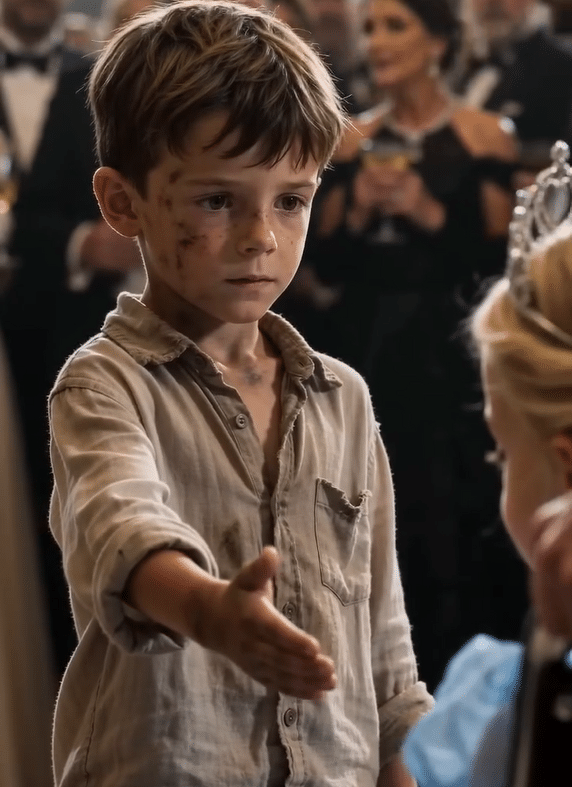
    CHAPTER 1 — THE BOY AT THE GOLDEN BALLROOM

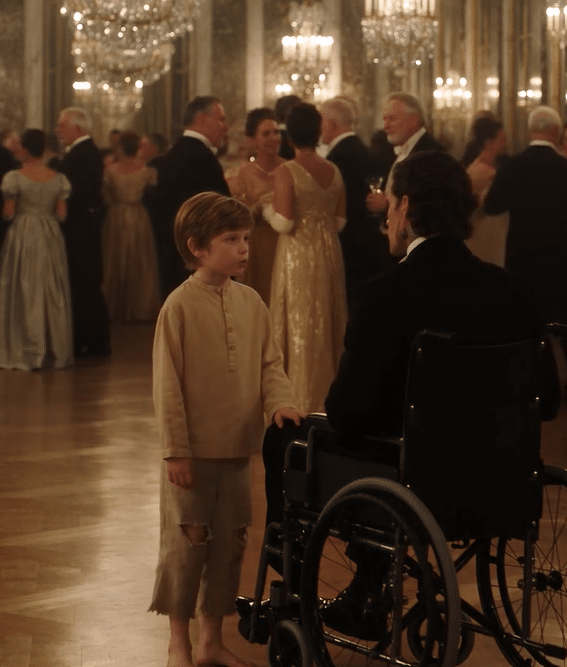
    The ballroom glittered like a palace.

    Crystal chandeliers hung from the ceiling, scattering thousands of golden reflections across the polished marble floor. Men in expensive tuxedos stood beside women wearing diamonds worth more than most houses. Soft music filled the room while waiters carried silver trays between the guests.

    It was the most exclusive charity gala of the year.

    And then the doors opened.

    Everyone turned.

    A boy stood there.

    He looked no older than eleven.

    His clothes were worn, his brown shirt was stained, and his hair was messy as though he had walked through rain and wind for hours. His shoes were missing. His bare feet were dirty against the spotless marble floor.

    Advertisement

    A wave of whispers moved through the ballroom.

    “Who let him in?”

    “Is this some kind of joke?”

    “Someone should remove him.”

    The boy ignored them.

    His eyes were fixed on one person.

    At the center of the ballroom sat a little girl in a pale blue dress.

    She was perhaps eight years old. A delicate silver tiara rested on her blonde hair, and her wheelchair stood beside a tall man wearing a dark green tuxedo.

    The man was Alexander Blackwood, one of the richest businessmen in the city.

    Advertisement

    People feared him.

    People respected him.

    And tonight, everyone was watching him.

    Alexander noticed the boy.

    His expression immediately hardened.

    “Who are you?” he asked.

    The boy swallowed.

    “My name is Noah.”

    A few guests laughed.

    Alexander’s jaw tightened.

    “This is a private event.”

    “I know.”

    “Then you also know you shouldn’t be here.”

    Noah looked at the little girl.

    “I came for her.”

    The ballroom became silent.

    The girl stared at him.

    Her eyes widened.

    “Do you know him?” Alexander asked.

    Advertisement

    She slowly shook her head.

    “No.”

    Noah stepped forward.

    Immediately, two security guards moved toward him.

    “Don’t touch me!” Noah shouted.

    The guards stopped.

    There was something in his voice—not aggression, but desperation.

    Alexander stood.

    “You have five seconds to explain yourself.”

    Noah reached into his pocket.

    He pulled out a small, damaged photograph.

    He held it toward Alexander.

    The photograph showed a woman standing beside a much younger Alexander.

    Alexander froze.

    His face lost its color.

    “Where did you get that?” he whispered.

    Advertisement

    Noah’s voice trembled.

    “From my mother.”

    Alexander stared at the photograph.

    He knew the woman.

    Her name was Emily.

    Twenty years earlier, Emily had worked for his family.

    She had disappeared after being accused of stealing money.

    Everyone believed she had fled.

    But Alexander had never forgotten her.

    “Where is your mother?” he asked.

    Noah lowered his eyes.

    “She died three months ago.”

    The room seemed to stop breathing.

    Alexander stared at the boy.

    Then Noah said the words that changed everything.

    Advertisement

    “She told me that if anything happened to her, I had to find you.”

    Before Alexander could respond, the little girl suddenly spoke.

    “Daddy…”

    Alexander turned.

    She was crying.

    “Why does he have Mommy’s picture?”

    Alexander’s heart stopped.

    Because the photograph Noah was holding showed Emily.

    And Emily had been the girl’s mother.

    The woman Alexander had believed was dead.

    The woman whose disappearance had destroyed his family.

    The woman whose name had never been spoken inside that mansion for years.

    Advertisement

    Alexander looked back at Noah.

    “Who exactly was your mother?”

    Noah’s eyes filled with tears.

    “She said her name was Emily Blackwood.”

    A gasp swept through the ballroom.

    Alexander took one step backward.

    Because Emily Blackwood had supposedly died twenty years ago.

    And if this boy was telling the truth…

    Then the past had just walked into the ballroom.

    And it had brought a secret with it.

  • Read more…

    Read more…

    THE LITTLE BOY WHO STOPPED THE WEDDING

    The ballroom glittered beneath three enormous crystal chandeliers.

    Hundreds of guests stood around the dance floor, laughing, drinking champagne, and congratulating the newlyweds.

    It was supposed to be the happiest night of Emma Carter’s life.

    But everything changed when a little boy walked across the crowded ballroom.

    His name was Noah.

    He was only seven years old, dressed in a simple cream-colored shirt and brown trousers. Unlike the wealthy guests surrounding him, Noah looked completely out of place.

    He didn’t belong to the family.

    Advertisement

    At least, that was what everyone believed.

    Noah walked straight toward the man sitting near the edge of the ballroom.

    Alexander Whitmore.

    The billionaire businessman was dressed in a perfectly tailored black tuxedo. His dark hair was carefully combed, and his expression remained calm despite the constant attention from the guests.

    But there was one thing everyone noticed.

    Alexander was sitting in a wheelchair.

    Three years earlier, a terrible accident had left him unable to walk.

    Since then, people had treated him differently.

    Advertisement

    Some felt sorry for him.

    Others saw weakness.

    And a few saw opportunity.

    Especially Richard Carter.

    Richard was Emma’s father and one of the most powerful men at the wedding.

    He had spent months arranging Emma’s marriage to Daniel Whitmore, Alexander’s only son.

    The marriage wasn’t about love.

    It was about money.

    And tonight, Richard believed everything had gone exactly according to plan.

    Until Noah appeared.

    The little boy stopped directly in front of Alexander.

    “Excuse me, sir.”

    Alexander looked down.

    Advertisement

    “Yes?”

    Noah glanced around nervously.

    Then he leaned closer.

    “I need to tell you something.”

    Alexander frowned.

    “What is it?”

    Noah reached into his pocket and pulled out a small golden medallion.

    The moment Alexander saw it, the color disappeared from his face.

    He knew that medallion.

    He hadn’t seen it in twenty-two years.

    It had belonged to his younger brother, Michael.

    Michael had disappeared when Alexander was twenty-five.

    His family had always believed Michael was dead.

    But the medallion was unmistakable.

    Advertisement

    Alexander reached for it with trembling fingers.

    “Where did you get this?”

    Noah swallowed.

    “My mother gave it to me.”

    “Your mother?”

    “She told me that if I ever saw you, I had to give it to you.”

    Alexander stared at the boy.

    “What is your mother’s name?”

    Noah hesitated.

    Then he whispered four words that made Alexander’s heart stop.

    “Her name is Lily.”

    Alexander’s fingers tightened around the medallion.

    Lily.

    That name belonged to a woman he had spent twenty years trying to forget.

    Advertisement

    A woman his father had sworn had betrayed the family.

    A woman Alexander had believed had abandoned Michael.

    He looked at Noah again.

    “Who are you?”

    The boy’s eyes filled with tears.

    “I’m Noah.”

    Alexander waited.

    Noah whispered,

    “Michael was my grandfather.”

    The ballroom suddenly seemed to disappear.

    Alexander stared at the child.

    His dead brother had a family.

    A family nobody had ever told him about.

    And if Noah was telling the truth…

    Then someone had spent twenty-two years hiding the Whitmore family’s darkest secret.

    Advertisement

    Across the ballroom, Richard Carter suddenly noticed the medallion in Alexander’s hand.

    His smile vanished.

    He knew exactly what it meant.

    And for the first time that evening, Richard looked afraid.