PARTS 1-5: THE MORNING I FINALLY WOKE UP
My future daughter-in-law shaved my head while I slept on my son’s wedding morning—
and still expected me to arrive smiling, stay silent, and hand her twenty-two million dollars.
I woke to a strange burning across my scalp.
At first, I thought I had slept badly.
There was a tightness at the back of my head, a faint sting near my left ear, something cold where warmth should have been.
Still caught between sleep and consciousness,
I reached for the thick silver hair that had fallen past my shoulders the night before.
My fingers touched nothing.
Not tangled strands.
Not a ruined haircut.
Skin.
I froze.
Then I ran both hands over my head.
Bare.
Almost entirely bare.
I sat upright so quickly the bedroom tilted around me.
My heart began pounding hard enough to make my vision pulse.
For three or four seconds, I could not make sense of what my hands were telling me.
My hair had been there when I went to sleep.
I remembered brushing it.
I remembered braiding it loosely because Lucia, my hairstylist, had told me not to use any products before the wedding.
I remembered standing at the vanity in my nightgown, studying the silver strands in the mirror.
Michael used to wrap that hair around his tiny fingers when he was a child.
Richard had once told me he hoped I never cut it.
I had carried it through widowhood, bankruptcy, long meetings, construction sites, funerals, negotiations, birthdays, disappointments,
and twenty years of becoming a woman I had never intended to become.
Now it was gone.
I threw off the covers.
Cold morning light leaked through the curtains as I stumbled toward the bathroom with one hand pressed against my head.
Before I switched on the light, I smelled antiseptic.
Sharp.
Clinical.
Deliberate.
My stomach turned.
I flicked the switch.
And faced the mirror.
For one suspended second, I did not recognize the woman staring back.
Her scalp was raw and unevenly flushed.
Tiny fragments of silver hair clung near one ear where the razor had missed them.
There was a small nick above the base of her skull.
Her eyes were wide.
But the rest of her face had gone frighteningly still.
I lifted a hand.
So did she.
Someone had entered my bedroom while I slept.
Someone had stood beside my bed.
Someone had touched me without waking me.
Someone had taken a razor to my head.
Not in anger.
Not during an argument.
Not in some impulsive moment when emotions ran wild.
Carefully.
Quietly.
Piece by piece.
I looked toward the bathroom counter.
That was when I saw the note.
A square of white paper had been taped to the center of the mirror.
“Congratulations—you finally have a hairstyle that suits your age.”
A tiny heart had been drawn beneath the sentence.
I stared at it.
The handwriting was neat.
The cruelty was effortless.
I peeled the paper from the glass.
A familiar perfume rose from it.
Sweet.
Expensive.
Floral with something darker underneath.
I knew that perfume.
I had given Sabrina a bottle of it for Christmas after Michael mentioned she liked it.
I had paid four hundred dollars for something she had now used to sign her work.
“Sabrina.”
Her name came out as barely more than breath.
I looked at the cheerful little heart again.
And something inside me changed.
There are moments when pain arrives so violently that you cannot feel it all at once.
Instead, the mind becomes practical.
It separates itself from the wound.
It begins making lists.
What happened?
Who did it?
What happens next?
I did not scream.
I did not cry.
I did not call Michael.
That last fact surprised even me.
For most of my adult life, whenever anything involving my son went wrong, my first instinct had been Michael.
Protect Michael.
Explain to Michael.
Forgive Michael.
Help Michael.
Make things easier for Michael.
Even when he was forty-one years old, some part of me still heard the twelve-year-old boy
who had once stood outside a hospital room asking why his father could not come home.
But I did not call him.
I folded Sabrina’s note once.
Then again.
I placed it beside the sink.
And walked barefoot across the cold marble floor to the safe in my bedroom.
The safe was hidden behind a painting Richard had bought at an estate sale the year before he died.
A harbor in winter.
Gray water.
Gray sky.
One small boat fighting toward shore.
I entered the code.
The metal door opened.
Inside rested an ivory envelope.
I had prepared it the night before.
Twenty-two million dollars.
Not in cash, of course.
The envelope contained the final authorization documents for a transfer I had spent months arranging with my attorney and financial team.
A Manhattan investment account.
A substantial property interest.
Funds sufficient to purchase the Beacon Hill penthouse Sabrina had fallen in love with.
A portfolio designed to provide them income for decades if managed responsibly.
I had intended to give it to Michael and Sabrina at the reception.
Their wedding gift.
Twenty-two million dollars.
I sat on the edge of my bed with the envelope in my lap.
My hands did not shake.
That frightened me more than if they had.
Because suddenly I saw the gift clearly.
It was not merely money.
It was a penthouse.
Security.
Investments.
Power.
Freedom from consequences.
It was the beginning of a life most people could never imagine.
And if I was honest, it was something uglier too.
It was my final attempt to keep my son close.
For years, I had dressed guilt in generosity and called it love.
Michael mentioned a condo, and I helped him buy one.
Michael wanted to travel through Europe after college, and I paid for it.
Michael wanted to “find himself” before entering the family company, and I funded that too.
Later, he complained that his friends had more independence because their parents had created trusts.
So I created one.
He never demanded these things.
That was the clever part.
He sighed.
He hinted.
He looked disappointed.
And I supplied the rest.
Each check had been an apology.
I am sorry I worked late when you were fifteen.
I am sorry grief made me silent.
I am sorry your father died.
I am sorry I had to choose between sitting beside you every afternoon and making sure the bank did not take our house.
I am sorry I was not soft enough.
I am sorry I became strong because somebody had to.
I ran my thumb along the edge of the envelope.
Then I remembered standing at my own wedding beside Richard with twenty-eight dollars in my checking account.
We had eaten grocery-store cake in his sister’s backyard.
My shoes hurt.
The photographer was drunk.
The folding chairs did not match.
And I had thought I was the richest woman alive because the man beside me looked at me as if nothing in the world mattered more.
Twenty-two million dollars.
What exactly had I been trying to buy?
I stood.
Returned the envelope to the safe.
Closed the metal door.
Then I turned the dial until the lock clicked.
Quiet.
Dry.
Final.
Not one dollar would move.
I picked up my phone and called Avery Whitman.
Our family attorney had represented me for almost twenty-six years.
He had been younger than Michael was now when we met.
Back then he had been an associate with a cheap suit and a terrifying attention to detail.
Now he had silver at his temples, three adult daughters, and a corner office overlooking Boston Harbor.
He answered on the second ring.
“Beatrice,” he said. “Good morning. Big day.”
“Yes.”
“Ready to finalize the transfer?”
“No.”
Silence.
Avery knew me well enough not to fill it.
“I want everything placed on hold immediately,” I said. “No transfer. No access. No exceptions.”
His voice changed.
Not dramatically.
Just enough.
“Has something happened?”
I looked toward the bathroom.
At the raw scalp in the mirror.
At Sabrina’s note beside the sink.
“Yes.”
“Do you need me there?”
“Not yet.”
“Are you safe?”
That question almost undid me.
Not, Are you angry?
Not, What did Michael do?
Not, Is this about the wedding?
Are you safe?
I swallowed.
“Yes.”
“All right.”
“At the reception tonight, I want you to come to my house.”
“For what?”
“We’re rewriting the will.”
This time the silence lasted longer.
“Beatrice.”
“Yes?”
“Are you sure you want to make estate decisions today?”
“I have spent years making estate decisions while afraid,” I said. “Today may be the first day I’m making one while thinking clearly.”
He exhaled.
“What happened?”
I stared at my reflection.
“At some point I’ll tell you everything.”
“All right.”
“And Avery?”
“Yes?”
“Only one thing is wrong.”
“What?”
“I finally woke up.”
I ended the call.
Then I called Lucia.
She arrived twenty-eight minutes later carrying two black cases and wearing no makeup.
Lucia had been cutting my hair for twenty years.
She had seen me the morning after my mother died.
She had prepared me for business magazine covers I pretended not to care about.
She had fixed my hair after a disastrous charity gala where the humidity turned me into what she called “an aristocratic dandelion.”
She had known those silver strands almost as long as anyone.
When I opened the door, her eyes lifted.
Her hand flew to her mouth.
“Oh, Bea.”
I stepped aside.
She came in.
For several seconds she simply looked at me.
Then she put down her cases.
“Did you do this?”
“No.”
Her face changed.
“Who?”
I looked at her.
She closed her eyes briefly.
“No,” she said. “Don’t tell me yet.”
Perhaps she saw the answer anyway.
Perhaps she understood that speaking it aloud would make it more real.
She touched the skin near my temple with such care that I nearly broke.
“There are abrasions,” she whispered.
“I know.”
“This was done badly.”
“Yes.”
“Whoever did it could have cut you seriously.”
“I know.”
She looked into my eyes.
“Are you going to the wedding?”
“Yes.”
“Good.”
I blinked.
She opened one of her cases.
“I was afraid you were going to say no.”
“You think I should go?”
“I think whoever did this expects you not to.”
That was why I had called her.
Lucia understood war.
She simply practiced it with combs and pins.
From her second case she removed a soft gray-silver wig.
“I brought three,” she said. “This one is closest to your natural color.”
“You just had these?”
“I work in Boston. I have everything.”
Despite myself, a laugh escaped me.
One small laugh.
The first sound that felt human since I had awakened.
Lucia fitted the wig carefully over my scalp.
She adjusted the hairline.
Trimmed two strands.
Changed the part.
Then stepped back.
I looked like myself.
Almost.
The woman in the mirror had shoulder-length silver hair instead of the longer style I had worn the night before.
She looked elegant.
Composed.
No one would know.
Lucia met my gaze in the reflection.
“Do you want makeup?”
“Yes.”
“War paint?”
“No.”
That made her smile.
“What, then?”
“Something that looks peaceful.”
She understood immediately.
By nine-thirty, I was dressed in navy silk beneath a gray wool coat.
Pearl earrings.
Low heels.
My wedding gift remained locked in the safe.
Sabrina’s note was inside my purse.
So was a small digital recorder.
I had bought it years earlier for board meetings when I was tired of pretending I could remember every detail.
I almost left it behind.
Then I slipped it into my bag.
At the time, I could not have explained why.
Instinct, perhaps.
Or the new part of me that had finally begun planning for what people actually did instead of what I wanted to believe they would do.
St. Andrew’s Church glowed beneath the morning sun.
White roses climbed the stone steps.
Cars lined the curb.
Guests in dark suits and winter dresses moved beneath the tall doors, laughing, adjusting coats, holding programs printed on cream paper thick enough to make stationery a social statement.
I sat near the front.
No one knew what was beneath my silver hair.
No one knew what Sabrina had done.
No one knew that the twenty-two-million-dollar wedding gift no longer existed.
As the organ played, memories returned with merciless clarity.
Richard’s death certificate trembling in my hands when I was thirty-two.
Michael standing beside me in the hospital corridor.
Twelve years old.
Too thin.
Too pale.
“Where did Dad go?”
I had not known how to answer.
Three months later, I discovered how much debt Richard had hidden while trying to save his failing construction company.
People always told the story later as if I had been born ruthless.
As if widows simply wake one morning knowing how to negotiate mortgages, read zoning laws, restructure debt, and face men who call them sweetheart while trying to take their homes.
I had known none of it.
I learned because failure meant Michael lost everything.
I sold my jewelry.
I sold Richard’s truck.
I skipped meals.
I took bookkeeping work at night and property-management work during the day.
Eventually, I convinced a bank to let me assume a loan on a failing duplex.
I renovated one unit myself.
I painted walls at two in the morning.
I replaced cabinet hinges while Michael did homework on the kitchen floor.
That duplex became three.
Three became seven.
Seven became a small apartment building.
The building became two.
Then offices.
Then commercial property.
Then development.
Building by building, deal by deal, I dragged the Langford name out of grief and turned it into an empire.
The newspapers later called me brilliant.
No one had called me brilliant when I was unclogging a stranger’s toilet at midnight because I could not afford a plumber.
I had built a crown for my son.
Somewhere along the way, he forgot what it had cost me.
The music changed.
Everyone stood.
Sabrina appeared at the far end of the aisle.
She was beautiful.
I will never lie about that.
Her dress was ivory silk with hand-beaded lace.
Her dark hair fell in perfectly arranged waves.
Her father offered his arm.
Her mother dabbed her eyes.
And Sabrina smiled.
Then she looked toward me.
Only for a second.
Her eyes moved to my hair.
The smile shifted.
A tiny flicker.
Satisfaction.
She knew.
She believed the wig meant victory.
She believed I had covered the evidence because I was too ashamed to let anyone see what she had done.
Then she turned toward Michael.
My son looked at her as though she had descended from heaven.
Something inside me hurt.
Not because he loved her.
A mother should be grateful when her child finds love.
It hurt because I had begun to understand that love without character can become permission.
And Michael had given Sabrina permission for a very long time.
The ceremony passed like a dream I was watching from a distance.
Promises.
Rings.
Applause.
A kiss.
When Michael walked back down the aisle with his wife on his arm, he finally looked at me.
He smiled.
Not warmly.
Relieved.
As though my presence meant one less problem for him.
I smiled back.
And in that moment, I realized he had not called me that morning.
He knew I had stayed in the hotel suite where the bridal party had gathered the previous evening.
Sabrina had been there.
Two bridesmaids had been there.
Michael knew I had gone upstairs early.
Yet he had not checked on me once.
Maybe that meant nothing.
Maybe it meant everything.
Outside the church, guests crowded around the newlyweds.
Cameras clicked.
Sabrina laughed.
Michael kissed her cheek.
I stood near a stone pillar while people moved around me.
Then Sabrina excused herself from a photograph.
She crossed the courtyard.
Toward me.
Her heels clicked softly against the stone.
“Beatrice.”
“Sabrina.”
Her eyes went directly to my wig.
“Cute.”
I said nothing.
She leaned closer.
“Very convincing.”
My hand slipped into my purse.
Found the recorder.
Pressed one button.
A red light glowed beneath my fingers.
Then Sabrina smiled.
“You really did go through with the wedding,” she said.
“It’s my son’s wedding.”
“I thought you might hide.”
“Why?”
Her smile widened.
“You know why.”
Behind her, laughter rose from the steps.
I looked at this woman my son had just married.
“Did you come into my room last night?”
She rolled her eyes.
“Oh, please.”
“Did you?”
“You’re not going to do this here, are you?”
“I asked you a question.”
She folded her arms.
“You were sleeping.”
My heartbeat slowed.
Not faster.
Slower.
“So you admit you were in my room.”
She gave a tiny shrug.
“You sleep like the dead.”
“And you shaved my head.”
Her eyes sharpened.
“For God’s sake, Beatrice. It was hair.”
I stared at her.
“It grows back.”
“You used a razor on me while I was unconscious.”
“And you are being so dramatic already.”
I heard every word.
So did the recorder.
“You left the note.”
Her mouth curved.
“You found it?”
“Yes.”
“I thought the heart was a nice touch.”
Behind her, someone called her name.
She glanced back impatiently.
Then lowered her voice.
“I did you a favor. Your hair was ridiculous.”
I said nothing.
“You insist on making everything about you,” she continued. “You know that?”
“My shaved head?”
“The wedding. Michael’s life. The money. Every room you enter.”
There it was.
The money.
I let silence invite her forward.
It worked.
“You’ve had forty years to be Beatrice Langford,” she said. “Today is not about you.”
“So you shaved my head to make sure I understood that?”
“I wanted to see if you could take a joke.”
“A joke.”
“Yes.”
“And if I had refused to attend?”
She smiled.
“Then people would have assumed you were throwing another rich-widow tantrum.”
Another call came from the photographers.
Sabrina turned.
Then paused.
“Oh, and don’t make things weird about the gift tonight.”
My fingers tightened around the recorder.
“What gift?”
She looked back at me.
Her expression changed.
Only slightly.
“The transfer.”
I said nothing.
“Michael told me.”
Of course he had.
“We’ve already spoken to the broker about the penthouse,” she added. “So please don’t do one of those emotional things where you turn generosity into theater.”
I almost admired the sentence.
The audacity required to say it was extraordinary.
“You shaved my head while I slept,” I said. “And you are worried I might make the money emotional?”
For the first time, irritation cracked her perfect face.
“Do you know what your problem is?”
“No. Tell me.”
“You think money makes you untouchable.”
The irony was so clean I almost smiled.
She leaned closer.
“Michael chose me.”
Her voice softened.
“That’s what you can’t stand.”
Then she walked away.
The recorder remained warm in my hand.
I switched it off.
Across the courtyard, Michael placed an arm around his wife.
He did not know it yet.
But the twenty-two million dollars was no longer the most important thing he was going to lose that day.
And neither was I.
PART 2: THE PRICE OF SILENCE
I spent the drive from the church to the reception replaying Sabrina’s words.
Not the recording.
I did not need to.
They had carved themselves into me.
You sleep like the dead.
It was hair.
I thought the heart was a nice touch.
Don’t make things weird about the gift tonight.
There are people who become cruel only when angry.
Sabrina was not one of them.
Her cruelty was casual.
That was what frightened me.
She had not shaved my head because she lost control.
She had been in complete control.
She had entered my room, carried whatever she needed, removed my hair, cleaned enough of the evidence to avoid discovery until morning, taped a note to my mirror, and gone back to bed.
Then she had dressed in white.
That required something colder than temper.
It required certainty.
She had been certain nothing would happen to her.
And why wouldn’t she be?
For years, nothing had.
I had taught her that.
So had Michael.
My driver, Thomas, glanced at me through the mirror.
“Everything all right, Mrs. Langford?”
“Yes.”
The answer sounded ridiculous.
But strangely, it was becoming true.
I was not all right in the way Thomas meant.
My scalp hurt.
My son had married a woman who had humiliated me for entertainment.
My twenty-year fantasy that patience would eventually turn our family into something loving was collapsing.
But beneath all of that, something solid was forming.
I had spent years terrified of losing Michael.
The fear had shaped nearly every decision I made around him.
When he was twenty-three and dropped out of his MBA program after one semester, I told myself he needed time.
When he was twenty-seven and wanted money for a business idea that never moved beyond a logo and a rented office, I called it entrepreneurship.
When he was thirty and blamed me because he felt intimidated working in my company, I created a consulting position for him.
When he left that position six months later because the senior managers expected him to arrive before ten, I defended him.
“He’s finding his place,” I told them.
They knew better.
I knew better.
But whenever I tried to say no, Michael had a gift.
Not cruelty.
Distance.
He became quiet.
Cancelled dinner.
Took days to return calls.
He never said, Give me what I want or I will withdraw my love.
He did not have to.
I understood the language.
Then Sabrina arrived.
She made that language fluent.
The first time I met her, she was charming.
Not ordinary charming.
Extraordinary.
She remembered names.
Asked thoughtful questions.
Touched Michael’s arm when he spoke.
Listened when I described a restoration project and seemed genuinely interested.
I left dinner thinking, Thank God.
Michael has found someone who sees the best in him.
Three months later, the jokes began.
At first, they were small.
“You still use printed calendars? That’s adorable.”
“You know what would make this room look younger? Almost anything.”
“Beatrice, please tell me you’re not wearing those pearls again.”
I laughed.
Michael laughed.
Sabrina smiled.
Then the jokes became sharper.
At my sixty-third birthday dinner, she asked if the restaurant offered a senior discount.
At Christmas, she gave me anti-aging cream and announced, “I bought the industrial size.”
When I wore a red gown to a museum benefit, she looked at Michael and said, “Should we tell her red photographs harshly after sixty?”
He had laughed so hard he nearly spilled his drink.
I went home early.
The next morning Michael sent flowers.
No apology.
Just flowers.
That had become our family tradition.
Harm.
Silence.
Money.
Flowers.
Repeat.
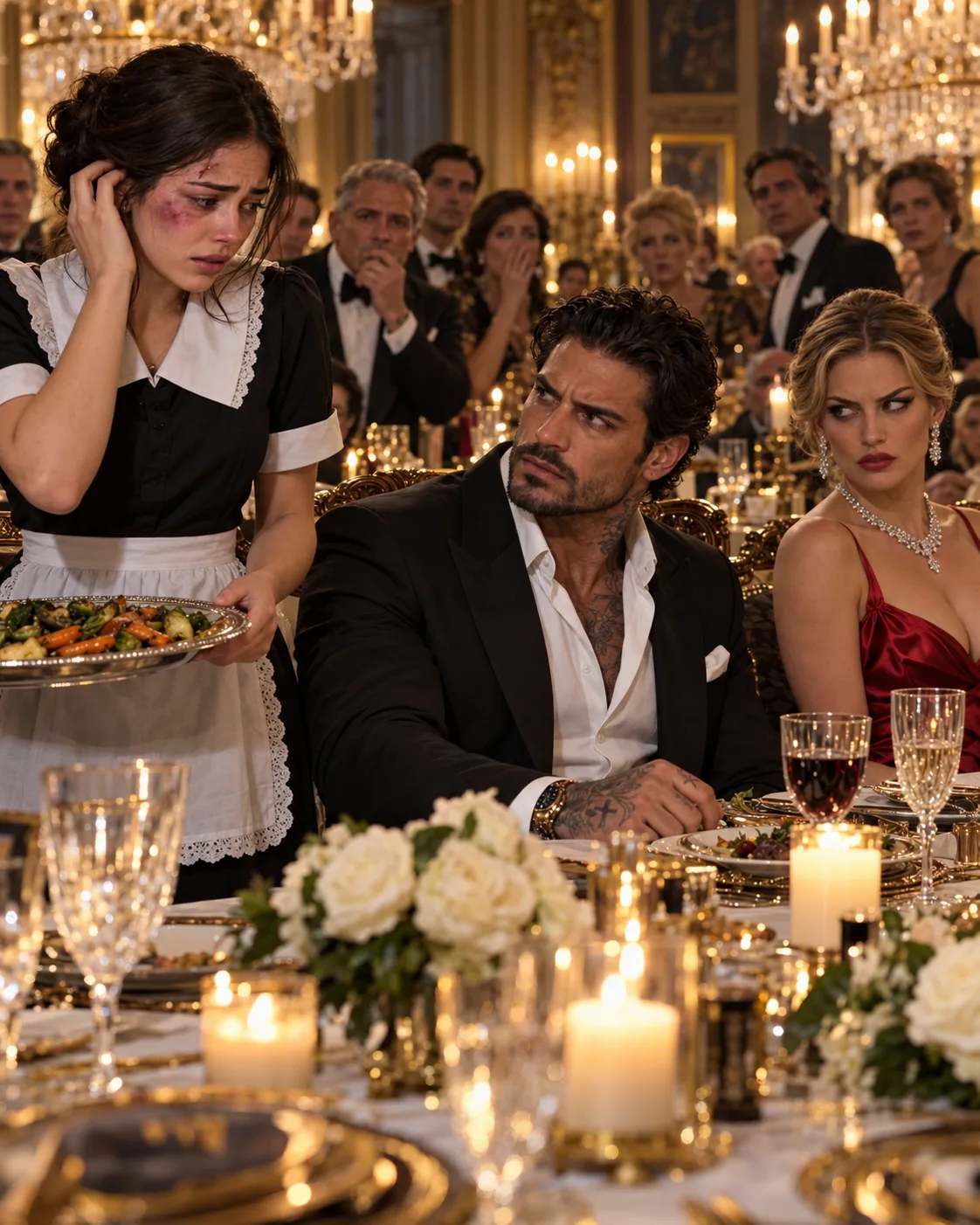
The reception was held at the Langham in a ballroom Sabrina had chosen because, according to Michael, she wanted “old Boston elegance without old Boston energy.”
I had paid for it.
Of course I had.
Crystal chandeliers poured warm light over white flowers and polished glassware.
A string quartet played near the windows during cocktails.
Every table held arrangements tall enough to block conversation.
Champagne moved through the room on silver trays.
Sabrina’s family occupied one side of the ballroom.
Mine occupied the other, though “mine” was generous.
Most were business associates, cousins I saw twice a year, old friends, and people Michael had known since school.
Lucia sat near the back.
I had quietly arranged for her to attend months earlier because she was more family to me than half the people carrying my name.
When I entered, she looked at me.
Not my wig.
Me.
I gave the smallest nod.
She understood.
Michael found me during cocktail hour.
“Mom.”
He kissed my cheek.
His eyes flicked over my hair.
“New style?”
I studied him.
If he knew, he was an excellent actor.
If he did not know, that created a different problem.
“You like it?”
“Looks good.”
“Thank you.”
He glanced toward the bar.
“Sabrina said you two talked after the ceremony.”
“Did she?”
“She said you were a little tense.”
I nearly laughed.
“A little.”
“Mom.”
There it was.
That tone.
The one that carried an entire warning inside a single word.
“Today matters to her.”
“I’m aware.”
“She’s been stressed for months.”
“So have I.”
His jaw tightened.
“Can we please not do this?”
“Do what?”
“You know.”
“No, Michael. I don’t.”
He looked around to make sure no one was listening.
“This thing where you make me choose.”
The sentence landed harder than Sabrina’s razor.
“I haven’t asked you to choose anything.”
“You don’t have to. I can feel it.”
“Interesting.”
“Please.”
He rubbed his forehead.
“She told me you were upset about a joke.”
I stared at him.
“A joke.”
“Yes.”
“Did she tell you what the joke was?”
His eyes shifted.
There.
Only a fraction.
But I saw it.
“You know,” I said.
He said nothing.
My chest went cold.
“Michael.”
“Not here.”
“You know what she did.”
“Mom.”
“How long have you known?”
He lowered his voice.
“She told me this morning.”
Before the ceremony.
He had known.
My son had stood at the altar knowing the woman walking toward him had shaved his mother’s head while she slept.
And he had married her without making a single phone call.
I looked at his face.
For years, I had protected myself by imagining he simply did not see.
That he missed Sabrina’s insults.
That he mistook cruelty for humor.
That he was uncomfortable confronting conflict.
Those explanations had allowed me to keep loving a version of him untouched by his choices.
But now I could not look away.
“What did she tell you?” I asked.
“That she cut your hair as a prank.”
“She shaved it.”
“I know.”
“To the skin.”
He exhaled.
“I know.”
“She entered my bedroom while I was asleep.”
“I know.”
“She put a razor against my head.”
His expression hardened.
“Why are you saying it like that?”
“Like what?”
“Like she attacked you.”
I looked at him.
He immediately realized what he had said.
His face changed.
But not enough.
“What would you call it?”
“I’d call it incredibly stupid.”
“Stupid.”
“Yes. And inappropriate. And childish. Pick whatever word you want.”
“Would you allow someone to shave your head while you slept?”
“That’s not the point.”
“It is exactly the point.”
“Mom, please.”
His voice dropped.
“Can’t you deal with this tomorrow?”
Tomorrow.
The sacred land where every difficult truth in our family was sent to die.
Tomorrow we will talk.
Tomorrow I’ll explain.
Tomorrow she’ll apologize.
Tomorrow we will fix this.
We had built an entire relationship out of tomorrows.
“What happens today?” I asked.
“What?”
“If tomorrow is when I am allowed to object to being shaved in my sleep, what is my role today?”
He looked exhausted.
“Be my mother.”
I almost smiled.
“I have been.”
“No. Today I need you to just be happy for me.”
“And what does that require?”
“Not causing a scene.”
There it was.
Not asking Sabrina to apologize.
Not asking if I was hurt.
Not asking if I needed a doctor.
Not asking why his bride had stood over his sleeping mother with a razor.
His concern was the scene.
I studied the child I had once given everything to.
He looked handsome in his tuxedo.
Richard’s eyes.
My mouth.
A face I knew better than my own.
Yet for the first time, I saw him as a man separate from my memories.
A man responsible for what came out of his mouth.
“Did she tell you about the note?” I asked.
He hesitated.
“No.”
I took it from my purse.
Opened it.
Handed it to him.
He read it.
His jaw shifted.
Then he folded it.
“Jesus.”
For one foolish heartbeat, hope rose in me.
Then he said, “Why would she leave something like this?”
Not, How could she say this to you?
Why would she leave evidence?
I took the note from his hand.
“Exactly,” I said.
He frowned.
“What does that mean?”
“It means you should go enjoy your reception.”
“Mom.”
“Your wife is waiting.”
His eyes narrowed.
“You’re not going to do anything, are you?”
The question was almost insulting.
But mostly it was clarifying.
I slipped the note into my purse.
“What are you afraid I’ll do?”
“I don’t know.”
“Tell the truth?”
“See, this is exactly what I mean.”
“What do you mean, Michael?”
“You turn everything into a test.”
I felt something inside me settle.
He was no longer twelve.
And I was no longer required to pretend he was.
“Go to your wife.”
“Mom—”
“Go.”
He stared at me for another moment.
Then left.
I watched him cross the ballroom.
Sabrina saw him coming.
She smiled.
He leaned down and whispered something.
Her eyes immediately found mine.
No fear.
Only annoyance.
That told me everything.
The dinner began.
Speeches followed.
Sabrina’s father spoke about destiny.
Her maid of honor told a story about college.
Michael’s best man described him as the most loyal person he knew.
That line almost made me choke on my water.
Then Michael stood.
He thanked Sabrina’s parents.
His friends.
The wedding party.
The planners.
The staff.
Finally, he looked toward me.
“And my mom,” he said.
Applause began.
He smiled.
“She taught me that family is everything.”
I stared at him.
Around me, people clapped.
My throat tightened.
Not because the words were beautiful.
Because I suddenly understood how easy beautiful words were.
Family is everything.
Unless family embarrasses you.
Unless family requires courage.
Unless family asks you to oppose the person sleeping beside you.
Unless family stops paying.
Then the emcee returned to the microphone.
Dessert appeared.
Music resumed.
I sat still.
Inside my purse, Sabrina’s note felt heavier than paper.
The recorder felt heavier still.
I had imagined many versions of confronting them.
Private.
Quiet.
Perhaps at my house tomorrow.
Perhaps with Avery present.
But then I remembered what Michael had asked of me.
Not justice.
Silence.
He wanted me to protect the wedding from the truth.
Sabrina had chosen a public day for a private humiliation because she counted on my shame doing the rest.
She wanted me to hide the injury so everyone could continue admiring the image.
That was how both of them operated.
Appearance first.
Truth later.
Maybe never.
I was done participating.
The emcee lifted his microphone again.
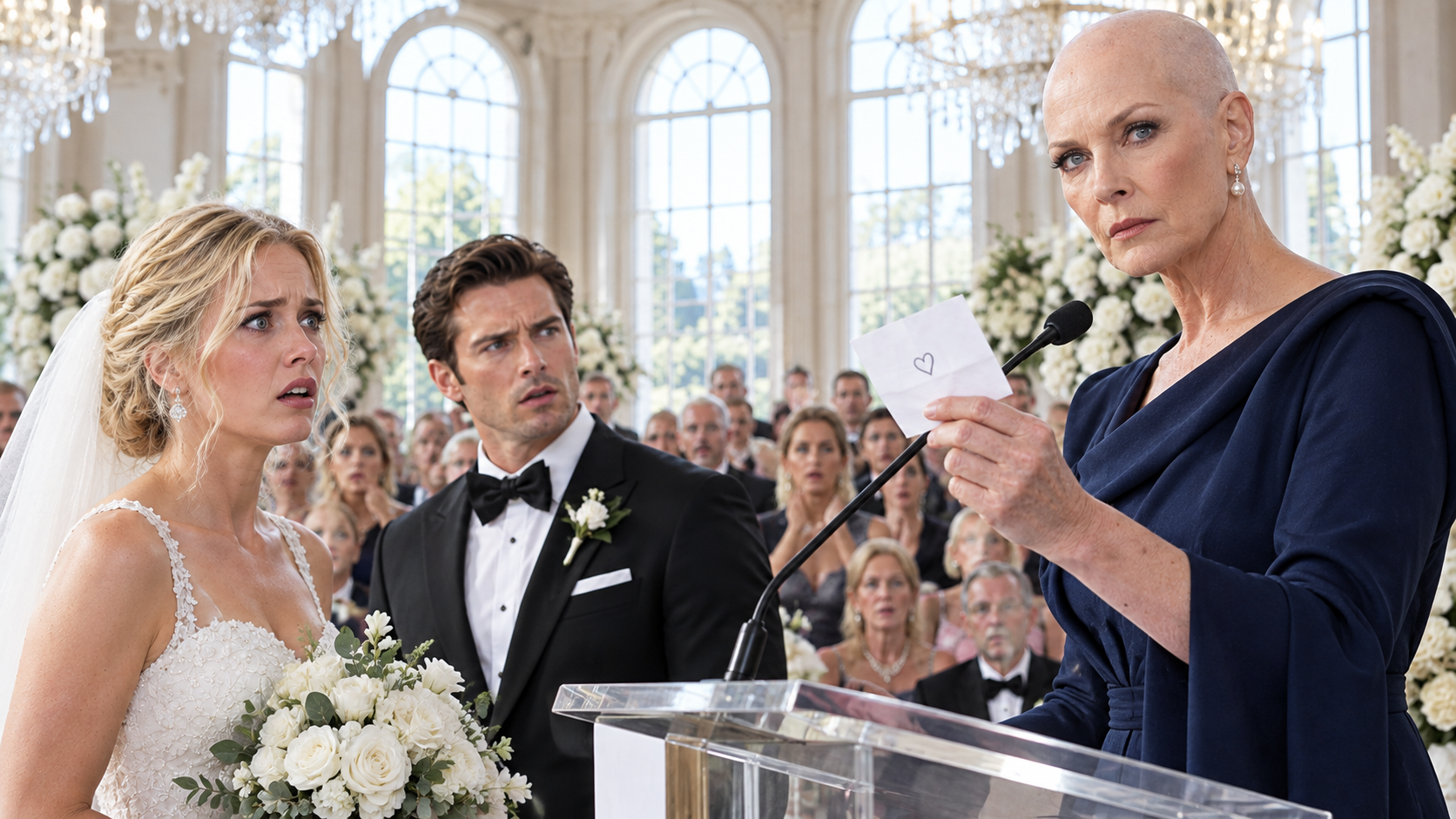
“And now, before we open the dance floor, we have a special moment from the groom’s mother, Mrs. Beatrice Langford.”
Applause swept through the ballroom.
Michael’s head snapped toward me.
Sabrina stopped smiling.
I stood.
Lucia met my eyes from across the room.
Avery was not there.
Not yet.
I would see him later.
This part belonged to me.
I walked beneath the chandeliers as conversations faded and every camera followed me.
At the microphone, I removed one folded piece of paper from my purse.
Sabrina’s note.
I placed it on the podium.
Even from across the room, she recognized it.
The color drained from her face.
Michael rose halfway from his chair.
I looked directly at my son.
Then I raised one hand.
Touched the edge of my silver hair.
And began to speak.
“Michael said a few minutes ago that I taught him family is everything.”
The room became quiet.
“I did teach him that.”
I paused.
“What I failed to teach him was that family without respect becomes something else.”
Michael’s face changed.
“Mom.”
His voice carried farther than he intended.
I kept going.
“This morning, I woke in my hotel room with a burning sensation across my scalp.”
No one moved.
“When I reached for my hair, it was gone.”
A murmur passed through the room.
Sabrina stood.
“Beatrice, this is not appropriate.”
I looked at her.
“No,” I said. “It wasn’t.”
Then I removed the wig.
PART 3: THE SPEECH THEY NEVER EXPECTED
The ballroom disappeared into silence.
Not ordinary silence.
The kind of silence that seems to absorb the air itself.
I placed the silver wig beside Sabrina’s note.
My bare scalp caught the chandelier light.
A woman near the front gasped.
Someone dropped a fork.
I heard it strike a plate.
Michael stared at me.
His mouth opened.
Closed.
Sabrina looked as if someone had struck her.
For one moment, I saw exactly what she had counted on.
Shame.
Mine.
She had believed I would never show anyone.
She had believed vanity would imprison me.
She had forgotten something important.
I had been poor.
I had been widowed.
I had been humiliated by bankers, contractors, investors, competitors, relatives, and strangers.
I had cleaned toilets in buildings where tenants later learned I was the owner.
I had walked into negotiations wearing secondhand shoes while men twice my age laughed at me.
Hair was not where my dignity lived.
“My future daughter-in-law entered my bedroom while I slept,” I said.
“Stop.”
Michael’s voice.
I looked at him.
“No.”
His face went pale.
I turned back to the room.
“She shaved my head with a razor.”
Whispers erupted.
Sabrina pushed her chair back.
“This is insane.”
I unfolded the note.
“She then left this taped to my bathroom mirror.”
I read it aloud.
“Congratulations—you finally have a hairstyle that suits your age.”
The tiny heart did not need explanation.
The room reacted differently now.
Not shock.
Disgust.
Sabrina stepped away from the table.
“You have no right to do this.”
I looked at her.
“No right?”
“It was a joke!”
Her voice rang through the ballroom.
And there it was.
An admission made without realizing it.
Several guests turned toward one another.
Michael stood fully.
“Sabrina.”
“What?” she snapped. “She’s humiliating me!”
I almost laughed.
I folded the note carefully.
“You shaved my head while I was unconscious.”
“And now you’re ruining my wedding over hair!”
Her mother hurried toward her.
“Sabrina, stop talking.”
Too late.
The truth had finally found a microphone.
Michael came toward the podium.
I held up one hand.
He stopped.
Perhaps it was instinct.
Perhaps some part of him remembered being a child.
“I spoke to Michael before dinner,” I said.
His face tightened.
“I discovered he already knew what happened.”
The room shifted again.
That was the moment he understood this was not going to be contained.
“Mom, please.”
“He knew before the ceremony.”
“Beatrice.”
“No.”
My voice remained calm.
That was what frightened him.
Anger he understood.
Tears he could manage.
Guilt he could soothe with flowers.
But calm?
Calm meant I no longer needed anything from him.
“He told me,” I continued, “that what Sabrina did was stupid and inappropriate.”
“I said more than that.”
“No, Michael. You did not.”
His mouth closed.
“You asked me not to cause a scene.”
Several heads turned toward him.
I watched humiliation rise across his face.
And for one heartbeat, I hated myself.
He was my son.
I had spent forty-one years trying to protect him from pain.
The instinct did not disappear simply because he had disappointed me.
It screamed inside me now.
Stop.
Protect him.
End this.
Tell everyone it was a misunderstanding.
Save him.
Then I touched my bare scalp.
And remembered who had protected me.
No one.
So I continued.
“I was asked to smile,” I said. “To sit here. To let photographs be taken. To pretend nothing happened.”
My eyes moved to Sabrina.
“And I almost did.”
Her expression changed.
A flicker of hope.
I let it die.
“But I have spent too much of my life confusing silence with love.”
No one spoke.
“I believed that if I kept giving enough, forgiving enough, excusing enough, I could keep my family together.”
My voice tightened.
“For years, whenever Michael needed something, I gave it.”
“Mom, this isn’t about money.”
I turned toward him.
“It became about money the moment your wife reminded me not to make things weird about the gift.”
Sabrina froze.
Michael looked at her.
“What?”
Interesting.
He had not known about that.
I reached into my purse.
Removed the recorder.
Sabrina’s eyes widened.
“What is that?”
I pressed play.
Her voice filled the ballroom.
You sleep like the dead.
A visible shiver went through several people.
Then my recorded voice.
So you admit you were in my room.
Sabrina again.
You were sleeping.
I let the recording continue.
For God’s sake, Beatrice. It was hair.
It grows back.
I thought the heart was a nice touch.
Then the sentence I knew mattered most.
Oh, and don’t make things weird about the gift tonight.
I stopped the recording.
The silence afterward felt enormous.
Michael turned slowly toward his wife.
“What gift?”
She stared at him.
“You know what gift.”
“No,” he said. “What did you say to her?”
“Michael, don’t.”
“What did you say?”
I answered for her.
“She told me you had already spoken to a broker about the penthouse.”
His face changed.
Not because it was false.
Because it was true.
He looked at me.
“Mom, I can explain.”
“I’m sure you can.”
“It wasn’t like that.”
“It rarely is.”
Sabrina’s mother reached her now and grabbed her arm.
“Come sit down.”
Sabrina pulled away.
“No.”
Then she looked at me.
The mask was gone.
All the polished control.
All the sweet smiles.
All the expensive charm.
Gone.
“You planned this.”
I almost admired the accusation.
“I woke up without hair six hours ago.”
“You brought a recorder.”
“After I woke up without hair.”
“You baited me.”
“I asked if you shaved my head.”
“You knew I was stressed!”
A man near the bar muttered something I could not hear.
Sabrina’s eyes flashed.
“This woman has controlled Michael his entire life.”
There it was.
The defense she had been waiting to use.
“She controls everything with money. She controls where people live, where they work, what they get, what they don’t get.”
Some faces turned toward me.
Not all truths come from good people.
And not everything Sabrina said was false.
That was important.
I looked around the ballroom.
“She is right about one thing.”
Sabrina blinked.
So did Michael.
“I have used money badly.”
The room remained still.
“I told myself I was helping. Often I was.”
I looked at my son.
“But sometimes I was buying forgiveness I had never been asked to earn.”
Michael’s expression softened.
For a moment, I saw hope.
Then I finished.
“And sometimes I was paying people not to leave me.”
Hope disappeared.
“That ends today.”
Sabrina stared at me.
Michael knew before she did.
I could see it.
His eyes went toward my purse.
Toward the place where the ivory envelope should have been.
“Mom.”
“The twenty-two-million-dollar transfer has been cancelled.”
The ballroom erupted.
Not loudly.
Not at first.
It began as a wave of gasps and whispers.
Twenty-two million.
People heard numbers differently when they became large enough.
Sabrina’s face emptied.
“Cancelled?”
“Yes.”
“You can’t.”
Those two words revealed more than any confession.
Not, Why?
Not, Please.
Not, Can we talk?
You can’t.
I almost felt sorry for her.
She had mistaken expectation for ownership.
“I can,” I said.
Michael came closer.
“Mom, please don’t do this.”
“I already did.”
“When?”
“This morning.”
“Before you even spoke to me?”
“Yes.”
His face crumpled with disbelief.
“So you’d already decided.”
“I decided before I knew you were aware.”
Something flickered in his expression.
Then I watched him realize that fact made his position worse, not better.
“Twenty-two million dollars?” Sabrina said.
Her voice was quieter now.
More dangerous.
“You’re taking twenty-two million dollars away from us because of a haircut?”
“No.”
I looked directly into her eyes.
“You never had twenty-two million dollars.”
Her lips parted.
“It was mine.”
Then I turned to Michael.
“And I am not changing my mind because of a haircut.”
I touched my scalp.
“I am changing my mind because this finally showed me what I have been refusing to see.”
Michael looked wounded.
That hurt.
I let it.
“You knew,” I said.
He swallowed.
“You knew what she did, and your first concern was whether I would embarrass you.”
“That’s not fair.”
“It is exactly what happened.”
“I was trying to keep the wedding from blowing up!”
“Why?”
“Because hundreds of people were here!”
“And if there had been only three?”
He said nothing.
“If no one would ever know, would what she did become acceptable?”
“No.”
“Then why did the number of witnesses matter?”
His jaw tightened.
“You always do this.”
“Do what?”
“Make everything absolute.”
I stared at him.
“Someone shaved my head while I slept.”
His eyes closed.
“I know.”
“Some things are allowed to be absolute.”
Sabrina stepped forward.
“This is financial abuse.”
A few people visibly recoiled at the phrase.
I remained calm.
“No. Financial abuse would be taking money that belongs to you and using it to control you.”
I gestured toward the ballroom.
“This was a gift I had not yet given.”
“You promised us.”
“I planned to give it to you.”
“You told Michael it was happening.”
“Yes.”
“So this is punishment.”
“No.”
I shook my head.
“This is a boundary.”
Her face twisted.
“You’re pathetic.”
“Sabrina.”
Michael tried to stop her.
She ignored him.
“You couldn’t stand that today wasn’t about you, so you found a way.”
The sentence might once have destroyed me.
Instead, it clarified the final piece.
I leaned slightly toward the microphone.
“Sabrina, you entered my bedroom while I was unconscious and shaved my head.”
She flinched.
“If you truly believe I created this situation to attract attention, then nothing I say tonight will reach you.”
I stepped away from the podium.
Then stopped.
“There is one more thing.”
Michael’s shoulders sagged.
I looked at him.
“I love you.”
His eyes immediately filled.
Mine did too.
That was the cruelest part.
Love does not disappear when respect does.
Sometimes it survives long enough to hurt worse.
“I have loved you from the first moment I knew you existed,” I said. “I would have given my life for you.”
My voice trembled for the first time.
“I almost gave you something more dangerous.”
He stared at me.
“A life where every consequence could be purchased.”
Tears gathered in his eyes.
“Mom.”
“I helped create this.”
I swallowed.
“And I am sorry.”
He took one step toward me.
For one second, I thought he might embrace me.
Instead he whispered, “Please don’t leave.”
The child inside him.
The one I still knew.
My heart broke.
“I have to.”
“Can we talk privately?”
“Tomorrow.”
The word tasted bitter.
His eyes widened.
I almost smiled.
“Tomorrow,” I repeated. “But this time, tomorrow will actually come.”
I lifted the wig from the podium.
Then I changed my mind.
I left it there.
I walked through the ballroom bareheaded.
At first, I felt every eye.
Then, strangely, I stopped caring.
Lucia stood before I reached the doors.
She took off the silk scarf around her own neck and offered it to me.
I shook my head.
“No.”
She smiled through tears.
“Good.”
Outside, the Boston evening had turned cold.
I stepped beneath the hotel awning.
The air touched my scalp like ice.
It should have made me feel exposed.
Instead, I felt free.
For the first time in years, I was not thinking about what Michael needed from me.
Behind me, the reception continued without its illusion.
Ahead of me waited Avery.
A will.
A house full of memories.
And decisions I should have made long ago.
PART 4: THE SON I HAD BEEN AFRAID TO SEE
Avery was already at my house when I arrived.
He sat in the library with his briefcase beside him and a glass of water untouched on the table.
When I entered without the wig, he stood so fast his chair shifted backward.
For a man who had built his career on language, Avery Whitman had no words.
I closed the library door behind me.
“So,” I said, “that’s what happened.”
His face hardened.
“Who?”
“Sabrina.”
He inhaled slowly.
“Your son’s wife.”
“Yes.”
“Today?”
“Last night or early this morning.”
“While you were asleep?”
“Yes.”
He removed his glasses.
Pressed his fingers against the bridge of his nose.
“You need photographs.”
“Lucia took them before fitting the wig.”
“Good.”
“I also have the note.”
“Good.”
“And a recording of Sabrina admitting it.”
His eyes opened.
“You recorded her?”
“She approached me after the ceremony. I asked her directly.”
He stared for a moment.
Then nodded.
“We’ll discuss the legal details later.”
I sat.
“I didn’t ask you here to prosecute anyone.”
“I know.”
“I want the estate documents changed.”
Avery sat opposite me.
He opened his briefcase.
“Tell me what you want.”
That question was harder than I expected.
For decades, every estate plan had begun with Michael.
Michael receives the controlling interest.
Michael receives the residences.
Michael becomes beneficiary.
Michael inherits.
Michael.
Michael.
Michael.
My life had been arranged around one inevitable transfer.
Everything I built would become his.
Not because he had earned it.
Because he was my child.
That had always seemed reason enough.
Now I looked around the library.
Richard’s photograph stood on the mantel.
He was thirty-four in it.
Two years before he died.
Laughing at something outside the frame.
“What happens if I leave Michael everything?” I asked.
Avery did not answer immediately.
“Financially?”
“Emotionally.”
“I’m your attorney, Beatrice.”
“You’ve known him since he was sixteen.”
Avery leaned back.
“I think you already know what you believe.”
I looked at my hands.
“Yes.”
“Then say it.”
So I did.
“I think I have spent years teaching my son that love arrives as rescue.”
The sentence hurt.
“If he fails, I fix it. If he overspends, I cover it. If he chooses badly, I soften the consequences.”
Avery listened.
“I thought I was compensating for Richard.”
“You were a widow raising a child.”
“I know.”
“You were also working constantly.”
“I know.”
“Both things can be true.”
I looked at him.
“That’s what I’ve finally understood.”
Avery waited.
“I don’t want to disinherit Michael.”
His eyebrows rose slightly.
Perhaps he had expected anger to make me extreme.
“I still want him secure,” I said. “But I no longer want him in control of everything I built.”
“All right.”
“I want his trust revised.”
“How?”
“Structured distributions. Independent trustees. No direct control over the company.”
Avery nodded slowly.
“And the controlling interests?”
I looked toward Richard’s photograph.
“For years, I told myself they belonged to Michael because he was my son.”
Avery said nothing.
“They belong to the people capable of protecting them.”
“That means?”
“Professional governance. Employee participation. Some charitable transfer.”
He wrote notes.
“I want the foundation expanded.”
“The Langford Housing Foundation?”
“Yes.”
The foundation funded transitional housing and grants for widowed parents.
I had created it quietly years ago because I still remembered being thirty-two and terrified that one broken water heater could destroy us.
“How much of the estate?”
I thought.
Not in percentages.
In consequences.
What would make Michael safe without making him untouchable?
What would preserve what I built without turning his wife into the unofficial owner of an empire?
“Enough that the foundation becomes permanent,” I said. “And enough that Michael will never wonder whether he can eat or have a home.”
Avery smiled faintly.
“But not enough that he never has to ask what anything costs.”
“Exactly.”
He made another note.
We worked for almost an hour.
Not final signatures.
There would be reviews, witnesses, tax planning, revisions.
I understood that.
But the direction changed that night.
For the first time, my estate became about stewardship instead of guilt.
At 10:17, the doorbell rang.
I knew who it was before the housekeeper entered.
“Mrs. Langford?”
“Yes, Elena?”
“Michael is here.”
Of course he was.
“Alone?”
“Yes.”
Avery began gathering papers.
“Do you want me to stay?”
I thought about it.
“No.”
He looked toward the door.
“Are you sure?”
“Yes.”
He placed a card on the desk.
“Call me if you need anything.”
“I will.”
At the doorway he stopped.
“Beatrice.”
“Yes?”
“What you did tonight took courage.”
I shook my head.
“No.”
“What would you call it?”
“Being late.”
He considered that.
Then left.
Michael entered the library two minutes later.
His tie was gone.
His shirt collar was open.
His face looked ten years older than it had that morning.
For one dangerous second, every maternal instinct in my body rushed toward him.
Feed him.
Comfort him.
Tell him it will be fine.
Then I remembered that growth sometimes begins where rescue ends.
He looked at my head.
This time he did not look away.
“Does it hurt?”
I almost laughed.
That was the first time he had asked.
“Yes.”
His eyes filled.
“I’m sorry.”
Two words.
So small.
So late.
Still, they entered me.
I nodded.
He remained standing.
“Where’s Sabrina?”
“At the hotel.”
“Is she all right?”
He stared at me.
I raised one eyebrow.
A bitter laugh escaped him.
“Right.”
“Sit down.”
He sat opposite me.
For several seconds, neither of us spoke.
Then he said, “Why did you have to do it like that?”
There it was.
Not an apology.
Not yet.
The wound beneath the wound.
“Publicly?”
“Yes.”
“Because she used my silence as part of the humiliation.”
“You could have confronted us privately.”
“I confronted you privately.”
His face tightened.
“At the reception.”
“Yes.”
“You gave me five minutes.”
“I gave you the truth.”
“You blindsided me.”
I leaned back.
“Michael, I woke up bald.”
His eyes dropped.
“I know.”
“I had not been warned either.”
“That’s not what I mean.”
“I know exactly what you mean.”
He rubbed his face.
“Everyone was there.”
“Yes.”
“My colleagues. Sabrina’s family. My friends.”
“Yes.”
“You played a recording.”
“Yes.”
He looked at me.
“Do you have any idea what that did?”
“Yes.”
He flinched.
My voice softened.
“Do you?”
Silence.
“I wasn’t thinking,” he whispered.
“That is the problem.”
His eyes snapped up.
“I was trying to get through the wedding.”
“At my expense.”
“I didn’t know what else to do.”
“You could have called me.”
He said nothing.
“You could have come to my room.”
His jaw tightened.
“You could have asked if I was hurt.”
His eyes filled.
“You could have told Sabrina that what she did was unacceptable.”
“I did.”
“When?”
“This morning.”
“What did you say?”
He looked away.
“Michael.”
“I told her it was stupid.”
“Anything else?”
“I told her she went too far.”
“And then?”
“She cried.”
Of course.
“And?”
“She said she’d been drinking after the rehearsal dinner.”
A new fact, but not a new twist, merely excuse. Could still be okay. Better perhaps he says she was stressed, but source already says. Continue.
“She said she was stressed,” he added.
“And that made sense to you?”
“No.”
“But it made forgiveness convenient.”
He stood abruptly.
“You don’t understand what it’s like being between you two.”
I looked at him.
“Sit down.”
“I’m serious.”
“So am I.”
He paced toward the fireplace.
“You both pull at me constantly.”
“I do?”
“Yes.”
“How?”
“You judge her.”
“When?”
“You don’t like her.”
“That is not an action.”
“You make it obvious.”
“I paid for this wedding.”
He laughed bitterly.
“Exactly.”
“What does that mean?”
“You think paying means you don’t have to say anything.”
The sentence caught me.
He turned.
“You don’t scream. You don’t fight. You write checks. You smile. You act generous. And then everyone knows exactly how disappointed you are.”
Pain moved through me.
Because there was truth in it.
I had not become controlling through demands.
I had become controlling through rescue.
Through availability.
Through the certainty that my money could always shape the floor beneath him.
“I’m sorry,” I said.
Michael blinked.
I do not think he expected that.
“I’m sorry,” I repeated. “I should have allowed you to fail more.”
He stared.
“That is not what I meant.”
“I know.”
“I’m saying you made things difficult.”
“Yes.”
His face changed.
“But I did not make Sabrina shave my head.”
“No.”
“And I did not make you defend her.”
“I wasn’t defending her.”
“You asked me to wait until tomorrow because the truth was inconvenient today.”
He sat again.
The fight drained out of him.
“I messed up.”
“Yes.”
He looked at me.
“You could make this easier.”
There was the old language.
So familiar I almost answered automatically.
How?
Instead, I waited.
“The transfer,” he said.
Of course.
“Michael.”
“Just listen.”
“I am.”
“It doesn’t have to be twenty-two million.”
I stared at him.
His face reddened.
“That came out wrong.”
“No,” I said softly. “I think it came out exactly right.”
“I’m not here for money.”
“Then don’t talk about money.”
He closed his mouth.
A long silence followed.
Finally, he said, “Sabrina thinks you’re trying to destroy our marriage.”
“What do you think?”
He rubbed his hands together.
“I don’t know.”
“That is at least honest.”
“She thinks if I let this go, you’ll control everything.”
“I am not asking you to leave her.”
He looked surprised.
“I’m not.”
“You hate her.”
“Tonight, yes.”
The honesty shocked both of us.
“I may hate what she did for a very long time.”
He swallowed.
“But your marriage is yours.”
His shoulders relaxed slightly.
“However, my money is mine.”
They tightened again.
“My company is mine. My estate is mine. My home is mine. My dignity is mine.”
I leaned forward.
“And access to any of those requires respect.”
He looked toward the desk.
Saw Avery’s folder.
“What did you change?”
“Enough.”
“Am I out of the will?”
“No.”
He stared at me.
I watched surprise become something almost like relief.
“I am not trying to erase you, Michael.”
“Then what?”
“I am trying to stop erasing myself.”
He looked down.
I let the silence stretch.
“When your father died,” I said, “I made you the reason I survived.”
His face softened.
“That was too much to put on a child.”
“Mom—”
“Let me finish.”
He did.
“I told myself everything I built was for you. That sounds noble.”
I looked toward Richard’s photograph.
“But sometimes noble stories hide unhealthy truths.”
I breathed.
“I needed you to need me.”
Michael stared.
“And you learned how.”
The words sat between us.
Painful.
Accurate.
“I gave you money because I loved you.”
My throat tightened.
“And eventually I gave you money because I was afraid you would stop loving me.”
His face crumpled.
“Mom.”
“I don’t blame a child for learning the lesson his mother taught him.”
A tear slipped down his cheek.
“But you are not a child anymore.”
I felt tears reach my own eyes.
“And I am not going to keep paying you to stay.”
He shook his head.
“You never had to.”
“Then prove it.”
The room went still.
“How?”
“Stay without the money.”
His breathing changed.
Not anger.
Fear.
Maybe for the first time, he understood what I had spent years fearing from him.
A relationship without financial glue.
No penthouse.
No twenty-two million.
No promised empire.
Just two people.
Mother.
Son.
All wounds exposed.
“Can you do that?” I asked.
He wiped his face.
“I don’t know.”
I nodded.
“Neither do I.”
He looked toward me.
That answer seemed to affect him more than certainty would have.
“I need time.”
“You should take it.”
“Sabrina is furious.”
“I imagine so.”
“She says she’ll never come here again.”
“That is her choice.”
“She says you humiliated her.”
“She humiliated herself.”
He stood.
At the door, he stopped.
“Did you mean it?”
“What?”
“That you love me.”
I almost broke then.
Not at the wedding.
Not under the chandeliers.
Not while removing my wig in front of hundreds of people.
Then.
Because somewhere inside the forty-one-year-old man asking me that question lived the twelve-year-old boy I had spent my life trying to save.
“Yes,” I said.
His eyes closed.
“I love you more than I know how to explain.”
“Even after today?”
“Yes.”
He nodded.
Then I added, “But you are going to learn that love and access are not the same thing.”
His face tightened.
Still, he nodded again.
He left without asking for money.
For the first time in years, that felt like hope.
PART 5: WHAT GREW BACK
The first week after the wedding was quiet.
Not peaceful.
Quiet.
There is a difference.
The public spectacle had consequences.
Of course it did.
Phones rang.
Messages arrived.
People who had ignored me for years suddenly became deeply concerned about my wellbeing.
Others wanted details.
I gave almost none.
I did not leak the recording.
I did not release photographs.
I did not call reporters.
The humiliation had ended in the ballroom.
I had no interest in turning it into entertainment.
When asked what happened, I gave one answer.
“A private boundary was violated. I addressed it.”
Nothing more.
Sabrina sent no apology.
On the fourth day, I received an email from her.
Three pages.
I read it once.
She accused me of destroying what should have been the happiest day of her life.
She described the shaving as “a tasteless prank.”
She said I had manipulated the situation to punish Michael.
She said the cancelled transfer proved I had always intended to use money as control.
She said my public speech had damaged her reputation.
Near the end, she wrote:
You made sure everyone saw you as the victim.
I stared at that sentence for a long time.
Then I closed the email.
I did not respond.
Not every accusation requires a defense.
Sometimes a boundary is simply refusing to keep standing in a courtroom another person built inside their own mind.
Michael did not call for eleven days.
I counted.
I wish I could say I did not.
I counted every one.
Day one, I told myself he needed space.
Day three, I checked my phone during breakfast.
Day five, I nearly called him.
Day seven, I woke at three in the morning convinced I had destroyed our relationship.
That was the hardest night.
I went downstairs barefoot.
Made tea.
Sat in the dark kitchen.
And almost transferred the money back.
Not twenty-two million.
Something smaller.
A peace offering.
One million.
Half a million.
Anything.
The old reflex came alive with terrifying speed.
Fix it.
Pay.
Rescue.
Keep him.
My phone sat on the table.
My banking information was a few taps away.
I could already imagine the message.
I know things are difficult right now. I wanted you to have something to make the transition easier.
Transition.
A beautiful word for surrender.
I sat there until sunrise.
Then I turned off my phone and went upstairs.
By day eleven, I had stopped expecting him.
At 6:42 that evening, my phone rang.
Michael.
I stared at his name until the third ring.
Then answered.
“Hello.”
“Hi, Mom.”
His voice sounded strange.
Smaller.
“Hello, Michael.”
A pause.
“Can I come by?”
“Yes.”
He arrived carrying no anger.
No flowers either.
That mattered.
For years, flowers had been how we skipped conversations.
This time his hands were empty.
We sat at the kitchen table.
Not the library.
Not the formal sitting room.
The kitchen.
The same room where he had done homework as a child while I calculated mortgage payments on scrap paper.
He looked around.
“I forgot how much I like this room.”
“You hated this room when you were seventeen.”
“I hated everything when I was seventeen.”
“That’s true.”
He smiled.
It was the first easy thing between us in weeks.
Then the smile disappeared.
“Sabrina and I are living separately.”
I felt no triumph.
None.
Only sadness.
“I’m sorry.”
His eyes searched mine.
“You mean that?”
“Yes.”
“She thinks I betrayed her.”
“Did you?”
“I don’t know.”
I waited.
“I told her I couldn’t pretend what she did was a joke anymore.”
He rubbed his palms against his jeans.
“She kept saying the real problem was the money.”
“And what do you think?”
He looked at me.
“I think the money made it impossible for us to know what the real problem was.”
That was more insight than I expected.
I said nothing.
“She had already planned the penthouse,” he continued. “Furniture. Renovations. Everything.”
“I know.”
“She told people it was ours.”
I felt a familiar ache.
“Did you tell her about the transfer?”
“Yes.”
“Why?”
“I was excited.”
At least he did not lie.
“I thought…”
He stopped.
“What?”
“I thought you giving us that much meant you finally accepted her.”
The sentence surprised me.
“Michael.”
“I know.”
“No, I don’t think you do.”
I leaned forward.
“I paid for your wedding.”
“I know.”
“I invited her into my homes.”
“I know.”
“I included her in holidays, trips, family events.”
“I know.”
“I gave her gifts.”
“I know.”
“What did acceptance look like to you?”
He stared at the table.
“You liking her.”
I sat back.
There it was.
The impossible demand.
Not politeness.
Not respect.
Not inclusion.
Approval.
“You wanted me to feel something I did not feel.”
“Yes.”
“Why?”
“Because every time you looked at her, I could tell.”
“Tell what?”
“That you saw things I was trying not to see.”
The room became very quiet.
I did not move.
“What things?”
He laughed once.
Without humor.
“The way she spoke to waiters.”
I remembered.
“The way she talked about my friends when they left the room.”
I remembered that too.
“The way everything became somebody else’s fault.”
He swallowed.
“The way she made jokes that weren’t funny unless someone was hurt.”
My chest tightened.
“Why did you marry her?”
His eyes filled.
“Because when she loved me, I felt chosen.”
I understood that more than he knew.
“She made me feel like I was the center of the room.”
He looked toward the window.
“And I spent my whole life feeling like your company was the center of yours.”
There it was.
The old wound.
Not invented.
Not solved by twenty-two million dollars.
Real.
I nodded slowly.
“I’m sorry.”
He looked at me.
“I mean that.”
Tears blurred my vision.
“You deserved more of me when you were young.”
“You were working.”
“Yes.”
“You were keeping us alive.”
“Yes.”
“But I didn’t know that.”
“I know.”
“I just knew you weren’t there.”
I closed my eyes.
No amount of money could go backward and sit beside a lonely boy.
No penthouse could tuck him into bed at thirteen.
No trust fund could explain why grief had made his mother emotionally disappear for years even while her body remained in the house.
“I wish I had understood what you needed.”
“So do I.”
We sat with that.
No fixing.
No check.
No flowers.
Just truth.
Eventually, he said, “I’m sorry I didn’t call that morning.”
I looked at him.
“I was afraid.”
“Of Sabrina?”
“Of everything.”
He swallowed.
“She told me at six that she had cut your hair.”
“Shaved.”
“I know.”
“She said you’d be furious.”
“I was unconscious when it happened.”
“I know.”
“She told me you’d threaten to cancel the wedding.”
“Would you have listened if I had?”
He considered.
“I don’t know.”
I appreciated the answer.
“I kept thinking if I could just get through the ceremony, then I’d fix it afterward.”
“Tomorrow.”
His eyes met mine.
“Tomorrow.”
He nodded.
“I didn’t understand what that meant until you said it.”
“I spent years saying it too.”
“I know.”
He looked at my head.
A faint layer of silver had already begun returning.
“How long until it grows back?”
“Lucia says enough for a very short style in a few months.”
“It suits you.”
I raised an eyebrow.
His face panicked.
Then I laughed.
A real laugh.
He laughed too.
For half a minute, we were simply mother and son again.
It was not forgiveness.
Not yet.
But it was something living.
Michael stayed for dinner.
He left before ten.
As he stood at the front door, he looked back.
“I don’t want your money.”
I studied him.
“Be careful with dramatic statements.”
“I mean it.”
“You may feel differently when rent is due.”
That startled a laugh out of him.
Then he became serious.
“I want to try being your son without being your heir for a while.”
My throat tightened.
“That sounds healthy.”
“It sounds terrifying.”
“Yes.”
He nodded.
“Good night, Mom.”
“Good night, Michael.”
He hugged me.
For the first time in years, I did not wonder what the hug would cost.
Three months passed.
My hair returned slowly.
At first, it was soft silver shadow.
Then short strands.
Lucia shaped it into a close crop I would never have chosen voluntarily.
To my surprise, I liked it.
Not because Sabrina had been right.
She had not.
There is no age at which a woman deserves to be told how much of herself she is permitted to keep.
I liked it because now the choice belonged to me.
Choice changed everything.
Michael and Sabrina remained separated.
I did not ask him to divorce her.
I did not ask for updates I had no right to demand.
When he wanted to talk, I listened.
When he did not, I learned not to chase.
He rented an apartment.
His own apartment.
Not one I owned.
Not one purchased through a Langford entity.
He found a position with a development company that competed with mine.
When he told me, he looked almost afraid.
I smiled.
“Good.”
“That’s it?”
“What were you expecting?”
“A lecture.”
“You’re forty-one.”
“You noticed.”
“Recently.”
He laughed.
Then he said something I never expected.
“Thank you for cancelling the transfer.”
I stared at him.
“Don’t get sentimental.”
“I’m serious.”
“So am I. Twenty-two million dollars is a great deal of money.”
“I know.”
He smiled faintly.
“But I think I needed to find out whether I could stand without it.”
“And?”
He shrugged.
“I’m wobbling.”
“That’s standing.”
We never returned to what we had been.
I am grateful for that.
What we had been was not healthy enough to deserve restoration.
Instead, we built something new.
Slowly.
Awkwardly.
With boundaries.
Sometimes with anger.
Sometimes with weeks of distance.
But also with honesty.
As for Sabrina, she eventually sent me one more message.
Short this time.
I know you probably don’t want to hear from me. What I did was wrong. I was angry, jealous, and cruel. I’m sorry.
I read it twice.
I did not know whether it came from genuine remorse, therapy, Michael, or exhaustion.
For once, I did not need to know.
I replied with four words.
I received your apology.
Nothing more.
Forgiveness is not the same as reconciliation.
And reconciliation is not the same as restored access.
Those were lessons I learned late.
But late is not never.
Six months after the wedding, Avery and I completed the revised estate plan.
Michael remained a beneficiary.
He would be secure.
But he would not inherit direct control of the Langford companies simply by surviving me.
A professional board would oversee the core holdings.
Employees who had helped build the business would share more substantially in its future.
The foundation received a far greater portion of my estate.
Michael read the broad terms voluntarily.
He sat across from me in the same library where we had fought on his wedding night.
When he finished, he closed the folder.
“I thought I’d be angrier.”
“Are you?”
“A little.”
“Good.”
He looked offended.
“Good?”
“You are allowed to have feelings I don’t fix.”
He shook his head.
“You’re enjoying this new boundary thing.”
“Immensely.”
He laughed.
Then his expression softened.
“Dad would be proud of you.”
The words hit somewhere I was not prepared to defend.
I looked toward Richard’s photograph.
“I hope so.”
Michael followed my eyes.
“Do you think he would have been proud of me?”
I looked at my son.
Not the boy.
Not the heir.
Not the disappointment.
The man.
Still unfinished.
Like all of us.
“I think your father would tell you that who you become next matters more than who you were on the worst day of your life.”
Michael stared at me.
“Is that what you think?”
“Yes.”
He nodded slowly.
“Then I’ll try to deserve that.”
I reached across the desk and took his hand.
“Do it for yourself.”
One year after the wedding, I stood in my bathroom again.
The same bathroom where everything had begun.
Morning sunlight came through the curtains.
My hair now reached my jaw.
Silver.
Healthy.
Mine.
I had decided to keep it shorter.
Lucia complained that after twenty years of maintaining my long hair, I had betrayed her professionally.
I told her she would survive.
On the bottom shelf of my dresser lay the original note Sabrina had taped to the mirror.
I had considered throwing it away many times.
Eventually, I kept it for one reason.
Not revenge.
Memory.
Because people are remarkably skilled at rewriting pain after it passes.
We soften.
We excuse.
We tell ourselves maybe it was not that serious.
Maybe we overreacted.
Maybe keeping peace would have been easier.
The note reminded me of the woman who had stared into the mirror that morning and finally understood something she should have known all along.
Love that requires your humiliation is not love.
Peace purchased with silence is not peace.
Generosity given from fear is not generosity.
And family does not mean allowing people to wound you simply because losing them would hurt more.
I touched my hair.
Then I smiled at the woman in the mirror.
A year earlier, Sabrina had believed shaving my head would make me feel old, ugly, powerless, and ashamed.
For a few minutes, it had.
Then it gave me something twenty-two million dollars never could.
Clarity.
That morning, she thought she had taken something from me.
My hair.
My pride.
My place in my son’s life.
Instead, she removed the last thing hiding the truth.
I had built an empire after losing my husband.
I had raised a son while grieving.
I had survived debt, loneliness, fear, humiliation, and years of believing I had to earn love by making myself useful.
What happened on my son’s wedding morning did not destroy our family.
It exposed the parts that were already broken.
And once I could see them, I finally had a chance to stop pretending.
My hair grew back.
My relationship with Michael grew back differently.
My dignity had never actually left.
And the twenty-two million dollars?
It remained exactly where it belonged until I decided what purpose it should serve.
That was the part Sabrina had never understood.
She thought wealth was power because it could buy penthouses, security, luxury, and obedience.
She was wrong.
The most powerful thing I did that morning cost nothing.
I closed the safe.
I turned the dial.
And for the first time in my life, I stopped paying people to love me.
That was the day I finally woke up.